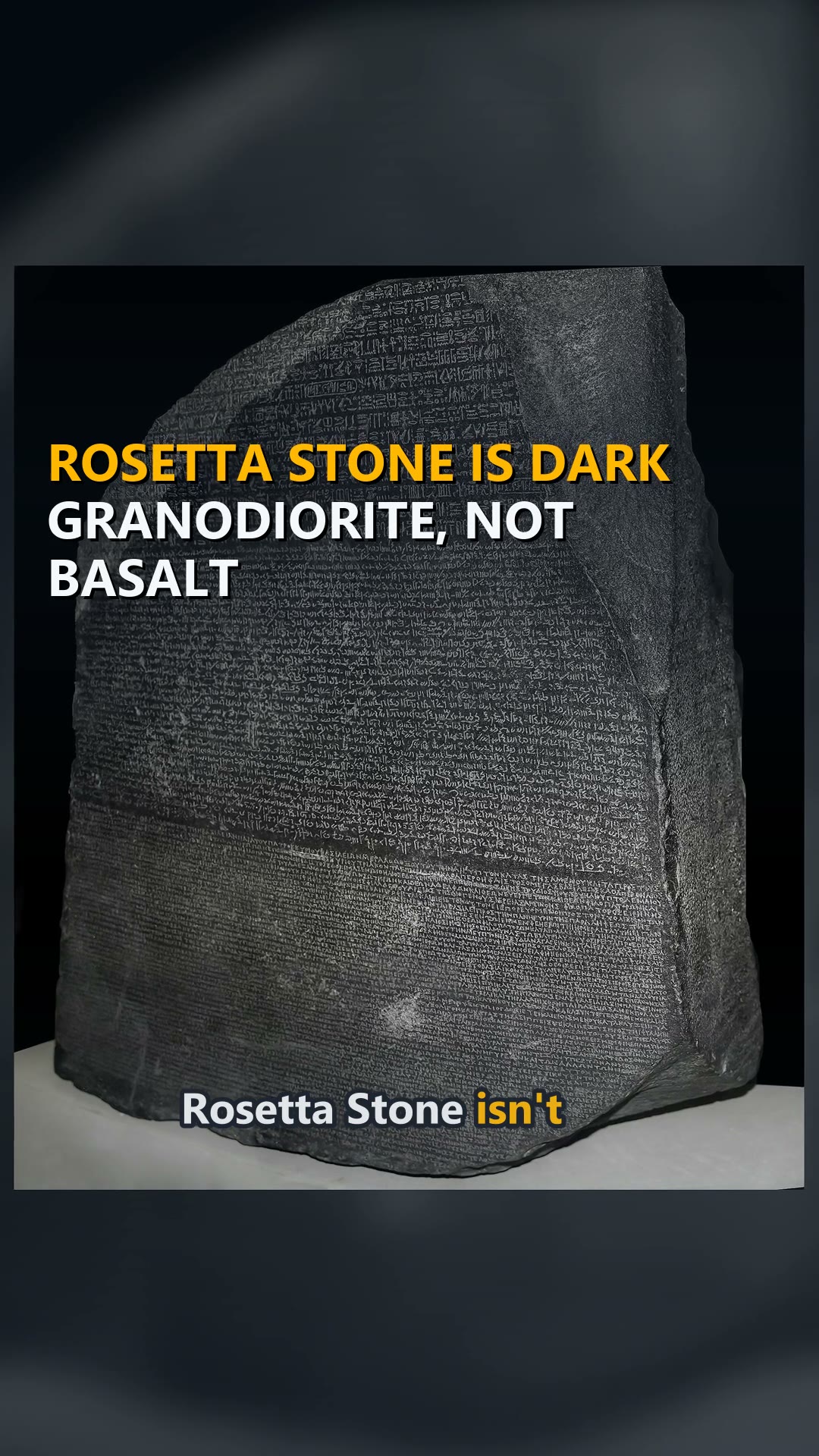
Rosetta Stone is dark granodiorite, not basalt
Rosetta Stone isn't black basalt. The Rosetta Stone is granodiorite from near Aswan, Egypt. The stone carries a decree issued in 196 BC during Ptolemaic Egypt.
What the video says
Rosetta Stone isn't black basalt.
The Rosetta Stone is granodiorite from near Aswan, Egypt.
The stone carries a decree issued in 196 BC during Ptolemaic Egypt.
Inscriptions were chalked white and covered with wax to protect them.
Cleaning in 1999 removed coatings and showed dark grey and pink veins.
The stone is 112.3 cm high, 75.7 cm wide, 28.4 cm thick.
Weight of the stone is about 760 kilograms or 1,680 pounds.
Three scripts appear: Egyptian hieroglyphs, Demotic, and Ancient Greek.
French officer Pierre-François Bouchard found the stone in 1799.
Decoding the stone helped scholars understand Egyptian hieroglyphs.
The decree honors King Ptolemy V with gifts and temple celebrations.
The stone likely came from a temple at Sais, Egypt’s ancient city.
British forces took the stone to London in 1801 after French defeat.
Studies began in 1803; Champollion deciphered hieroglyphs in 1822.
The Rosetta Stone is often mistaken for black basalt stone.
Source
More to watch
More about EgyptMore from WorldAll more videos
- The Library of Alexandria Survived Longer Than Thought
- Whales once walked Egypt's vast desert
- Vikings did not wear horned helmets
- The Diwali gift nobody opened for 7 years
- Is the Bermuda Triangle dangerous? NOAA says no
- The tongue map is a myth: every part tastes everything
- He dug up Ramses II in his garden, then called the authorities
- Fayum Mummy Portraits