Fayum Mummy Portraits
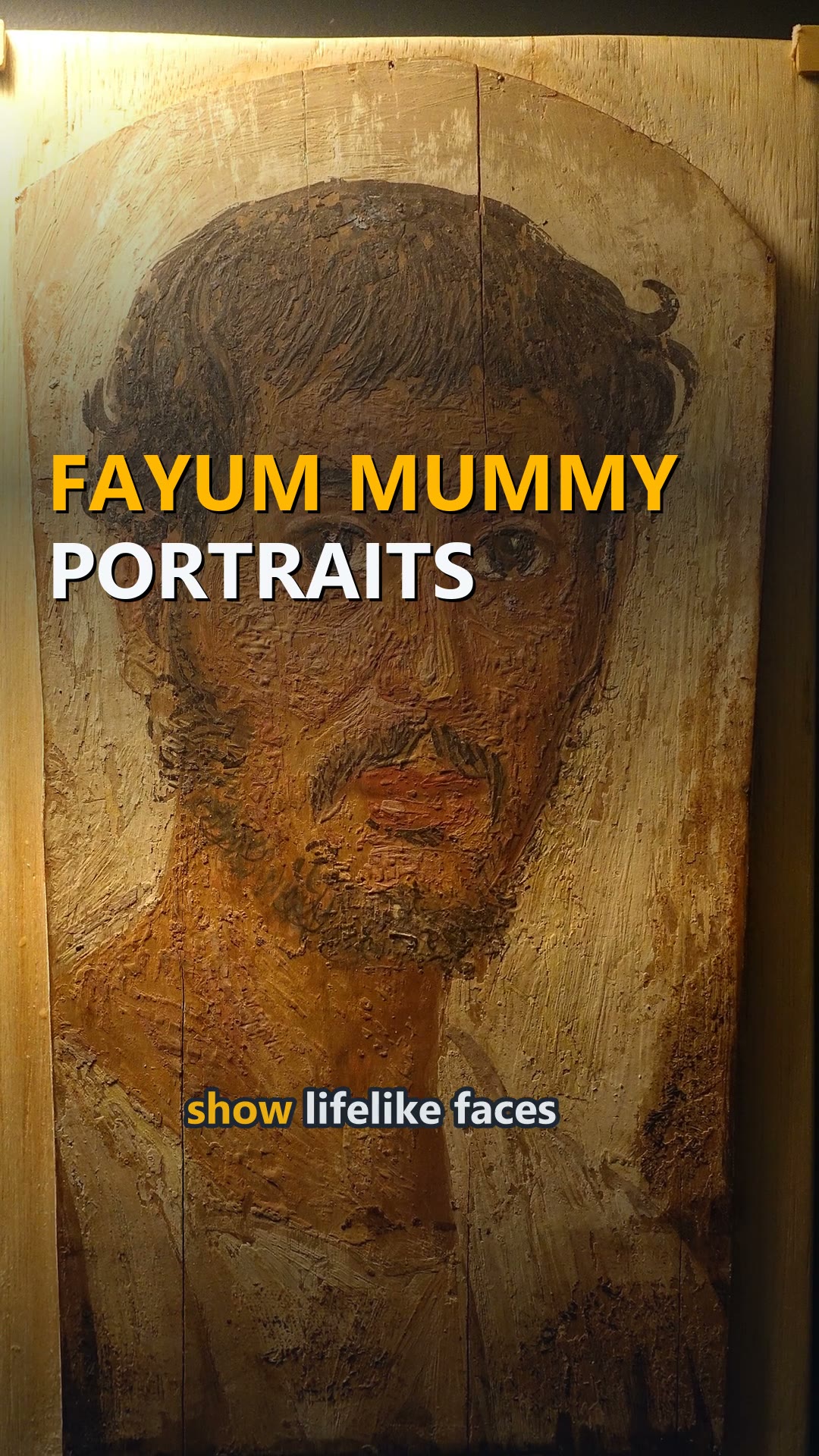
Fayum mummy portraits show lifelike faces on Roman-era Egyptian mummies. Fayum portraits are painted wooden boards mostly found in Egypt's Faiyum Basin. Portraits span late 1st century BC to mid 3rd century AD.
What the video says
Fayum mummy portraits show lifelike faces on Roman-era Egyptian mummies.
Fayum portraits are painted wooden boards mostly found in Egypt's Faiyum Basin.
Portraits span late 1st century BC to mid 3rd century AD.
Portraits were mounted into cloth wrappings covering mummified bodies.
Two painting methods used were encaustic wax and animal glue tempera.
Encaustic portraits have vivid colours and broad brushstrokes for detail.
Subjects range widely in age from children to elderly men and women.
Many depicted were native Egyptians adopting Greek or Latin names.
Portraits reveal more Greco-Roman than Egyptian artistic style influences.
Affluent military, civil, and religious figures commissioned most portraits.
Hairstyles and clothing in portraits follow Roman fashion trends closely.
Greek inscriptions sometimes name professions or show education levels.
Most portraits show young people, reflecting low life expectancy then.
Fayum portraits remain key survivors of classical panel painting tradition.
Source
More to watch
More about EgyptMore from WorldAll more videos
- He dug up Ramses II in his garden, then called the authorities
- Falafel: Middle Eastern Delight
- Codex Gigas weighs 74.8 kilograms
- Grandma's ghost came home for Halloween. She was not impressed
- The robot wrote his report in four seconds. Brian had a plan
- Lightning does strike the same place twice
- Inside Tutankhamun's Tomb
- Aswan High Dam Overview