Pamukkale’s Cotton Castle Is Made by Water
Calcite-rich waters formed Pamukkale’s dazzling white terraces. Hierapolis-Pamukkale is in southwestern Turkey’s Denizli province. Thermal springs flow from a cliff nearly 200 meters high.
What the video says
Calcite-rich waters formed Pamukkale’s dazzling white terraces.
Hierapolis-Pamukkale is in southwestern Turkey’s Denizli province.
Thermal springs flow from a cliff nearly 200 meters high.
Pamukkale means Cotton Palace, named for its bright white look.
The Attalid kings founded Hierapolis thermal spa in the 2nd century B.C.
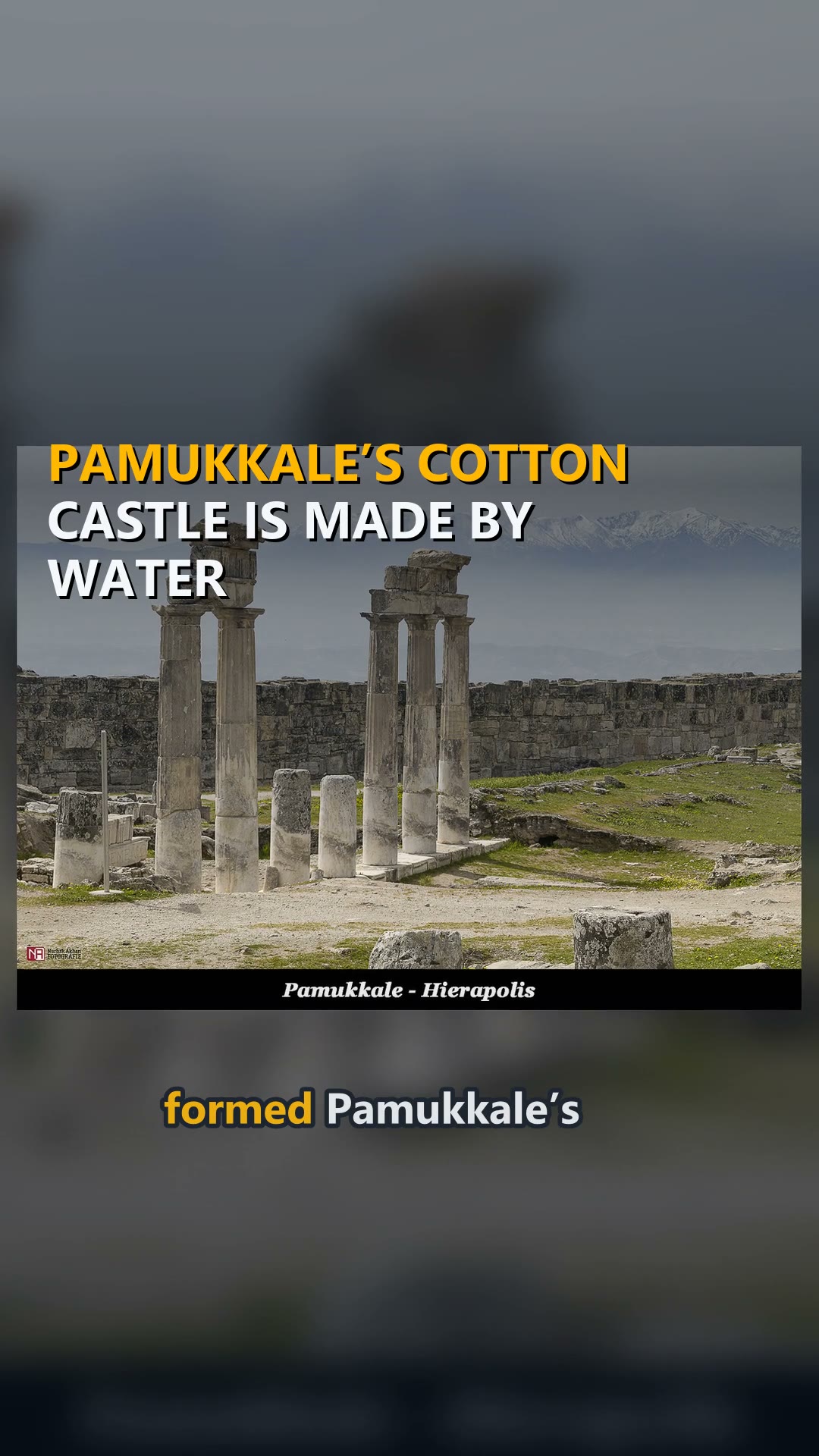
Hierapolis ruins include baths, temples, a theatre, and a large necropolis.
Terraced pools here range from less than one to six meters tall.
Hierapolis thrived under Rome, rebuilt after a quake in 60 A.D.
The theatre, from Severus’s time, shows ritual friezes and sacrifices.
Early Christian buildings from the 4th to 6th centuries mark the town.
Ancient stone blocks form part of Hierapolis city walls.
Thermal water flows through canals stretching 70 kilometers to nearby fields.
Tourists swim between ancient columns in a thermal lake near ruins.
Visitor access to terraces is banned to protect water flow and color.
This mineral-rich water flows from a cliff nearly 200 meters high.
Source
More to watch
More about TürkiyeMore from WorldAll phenomena videos
- The Piri Reis Map Changes What We Know
- Mount Nemrut's Beheaded Gods
- The tongue map is a myth: every part tastes everything
- Do we use only 10% of our brain? Myth, debunked
- Is the Bermuda Triangle dangerous? NOAA says no
- Vikings did not wear horned helmets
- Building the Süleymaniye Mosque
- The Tunnel Under the Bosphorus