Mount Nemrut's Beheaded Gods
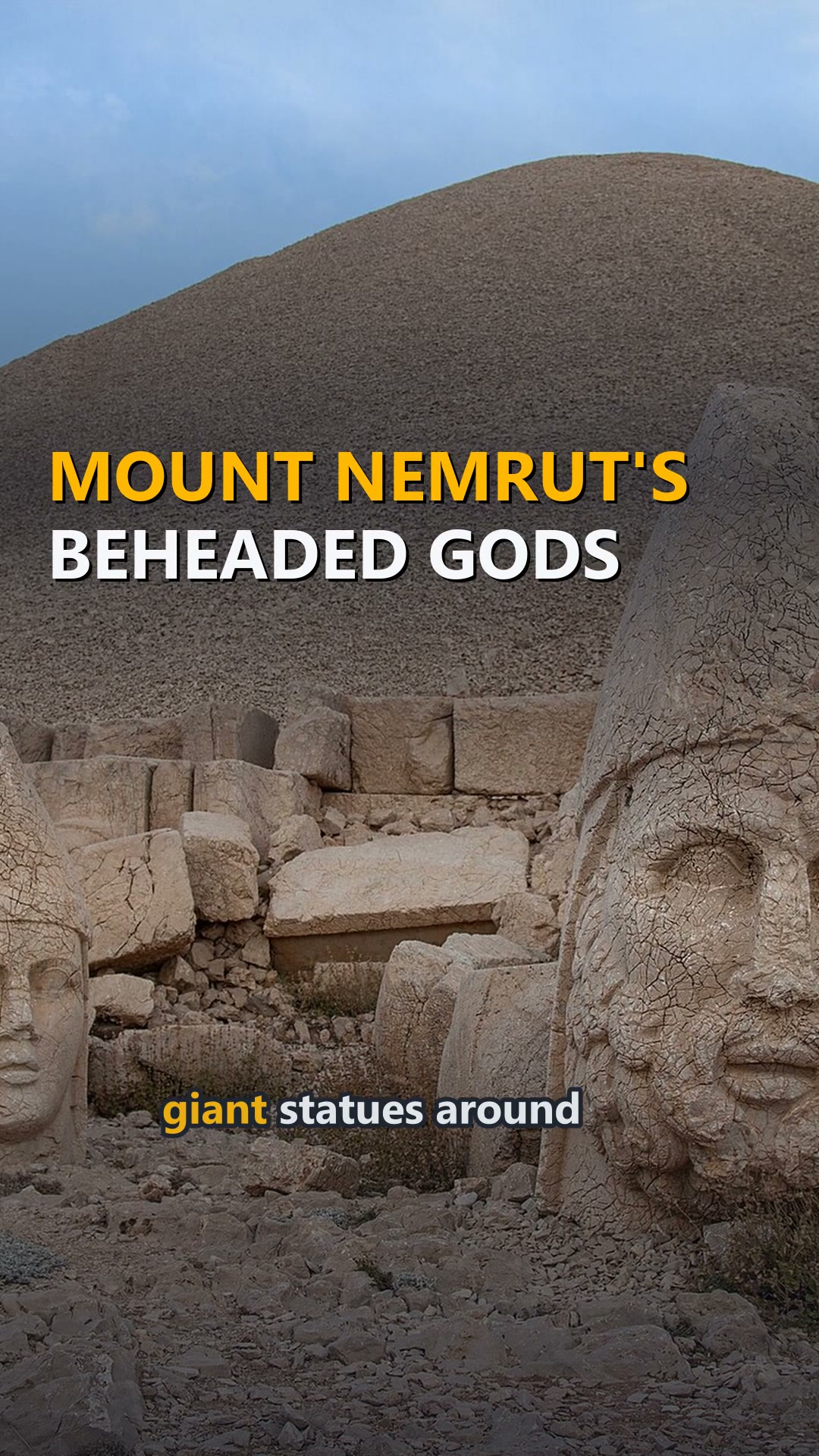
Mount Nemrut holds giant statues around a royal tomb from 62 BC. The 2,150-metre-high peak sits in southeastern Turkey's Anti-Taurus range. King Antiochus I of Commagene built the tomb-sanctuary in 62 BC.
What the video says
Mount Nemrut holds giant statues around a royal tomb from 62 BC.
The 2,150-metre-high peak sits in southeastern Turkey's Anti-Taurus range.
King Antiochus I of Commagene built the tomb-sanctuary in 62 BC.
Statues stand 8–9 metres tall on the terraces.
Antiochus merged Greek and Iranian gods into one composite pantheon.
Zeus-Oromasdes was once seated with an inscribed name.
Apollo-Mithras-Helios-Hermes has Greek-style facial features but Persian clothing.
The scattered heads have never been restored to their original bodies.
A tumulus of loose rock rises 49 metres above the sanctuary site.
Loose rock may hide the royal tomb from robbers.
Stone slabs depict the Greek and Persian ancestors of King Antiochus.
UNESCO added Mount Nemrut to the World Heritage list in 1987.
Tourists visit the beheaded gods between April and October each year.
Source
More to watch
More about TürkiyeMore from WorldAll places videos
- Building the Süleymaniye Mosque
- The Tunnel Under the Bosphorus
- He dug up Ramses II in his garden, then called the authorities
- Fiordland’s Vast Wild Landscape
- Codex Gigas weighs 74.8 kilograms
- The robot wrote his report in four seconds. Brian had a plan
- The Fine Grind of Turkish Coffee
- The Starch Gel Called Turkish Delight