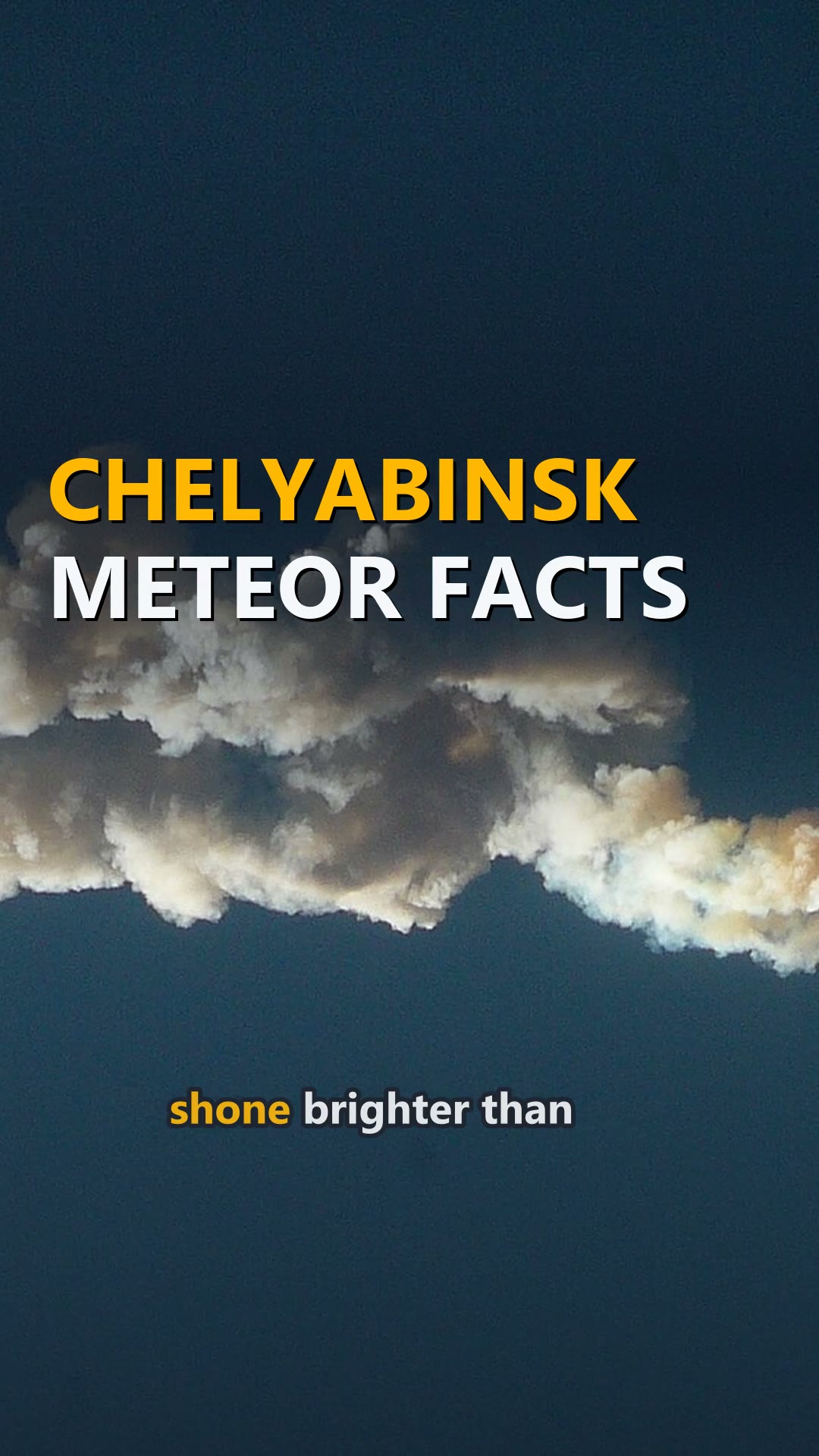
Chelyabinsk Meteor Facts
The Chelyabinsk meteor shone brighter than the Sun in 2013. The meteor entered Earth’s atmosphere over the southern Ural region. An 18-meter asteroid weighing 9,100 tonnes caused the meteor.
What the video says
The Chelyabinsk meteor shone brighter than the Sun in 2013.
The meteor entered Earth’s atmosphere over the southern Ural region.
An 18-meter asteroid weighing 9,100 tonnes caused the meteor.
The asteroid entered at about 19.2 kilometers per second speed.
Shock wave shattered glass inside Chelyabinsk Drama Theatre.
Shock waves damaged roughly 7,200 buildings across six cities.
About 1,491 people sought medical help following the blast.
School buildings in Chelyabinsk damaged by shock wave.
Meteorite fragments landed on ice near Lake Chebarkul’s frozen surface.
This meteor is the largest since the 1908 Tunguska event.
Interior damage from meteor explosion's shock wave in Chelyabinsk.
Chelyabinsk meteor remains a vivid example of atmospheric asteroid impacts.
Source
More to watch
More about Russian FederationMore from WorldAll phenomena videos
- Mir mine is the giant Siberian hole
- The Kola Superdeep Borehole Isn't Near the Mantle
- The tongue map is a myth: every part tastes everything
- Do we use only 10% of our brain? Myth, debunked
- Is the Bermuda Triangle dangerous? NOAA says no
- Vikings did not wear horned helmets
- Siberian Traps stretched 7 million square kilometers
- Lake Baikal Holds A Fifth Of Freshwater