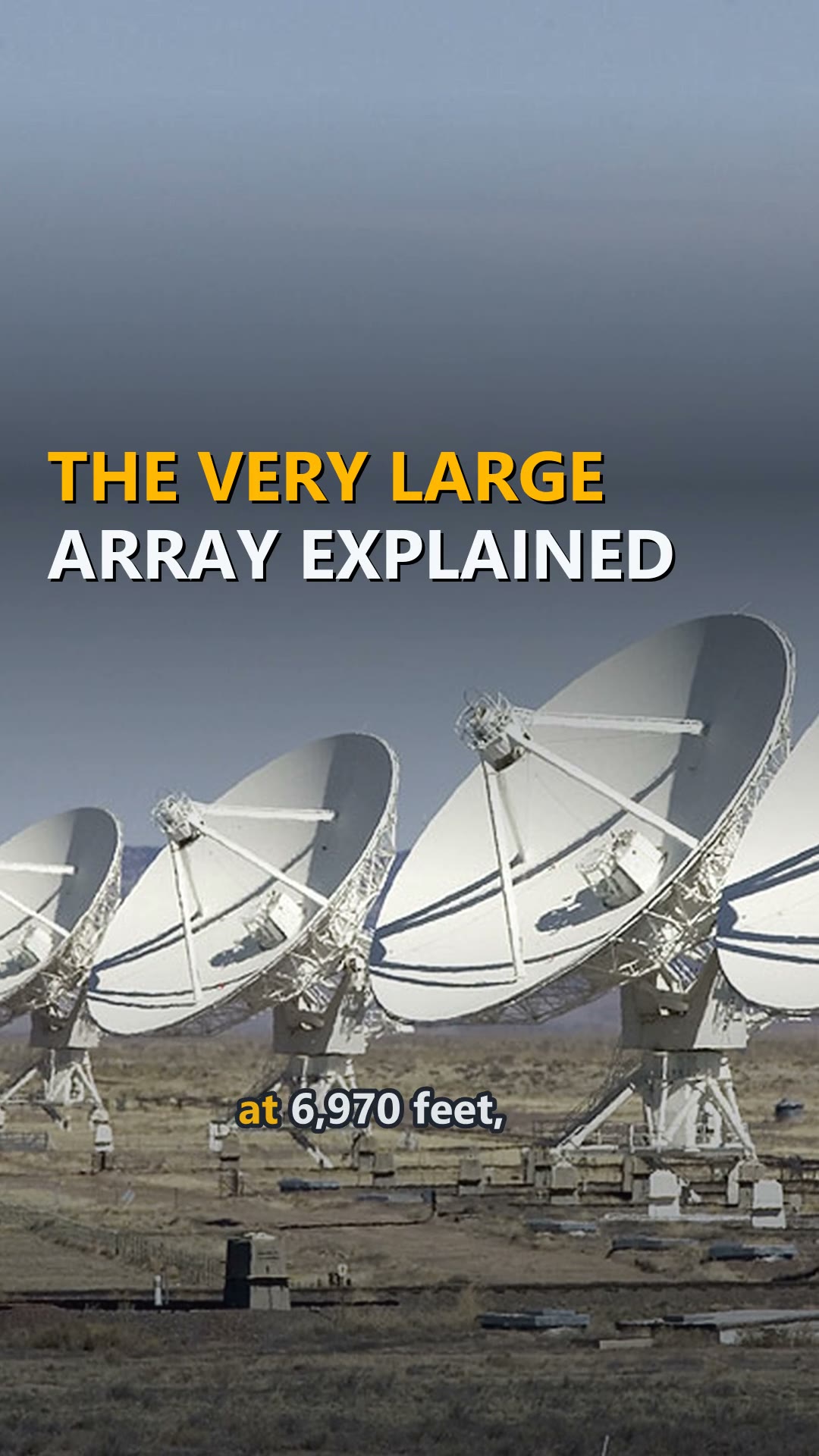
The Very Large Array Explained
The VLA stands at 6,970 feet, or 2,120 m, above sea level. Thin air is great for radio, terrible for breathing. The array has 28 radio telescopes on three arms, each 21 kilometers long on the desert floor.
What the video says
The VLA stands at 6,970 feet, or 2,120 m, above sea level. Thin air is great for radio, terrible for breathing.
The array has 28 radio telescopes on three arms, each 21 kilometers long on the desert floor.
The Very Large Array sees fine cosmic details.
Each telescope rides on double parallel railroad tracks. They move to adjust the array's shape.
Congress approved the project in August 1972. Construction required a total investment of 78.5 million dollars.
In 1989 it received Voyager 2’s Neptune flyby signals—catching a postcard from the ice giants is impressive.
The VLA is a component of the National Radio Astronomy Observatory. Astronomers study black holes and protoplanetary disks.
Visitors take self-guided walking tours. U.S. Route 60 cuts east-west through the site—bring your own sandwich.
Source
More to watch
More about United States of AmericaMore from WorldAll technology videos