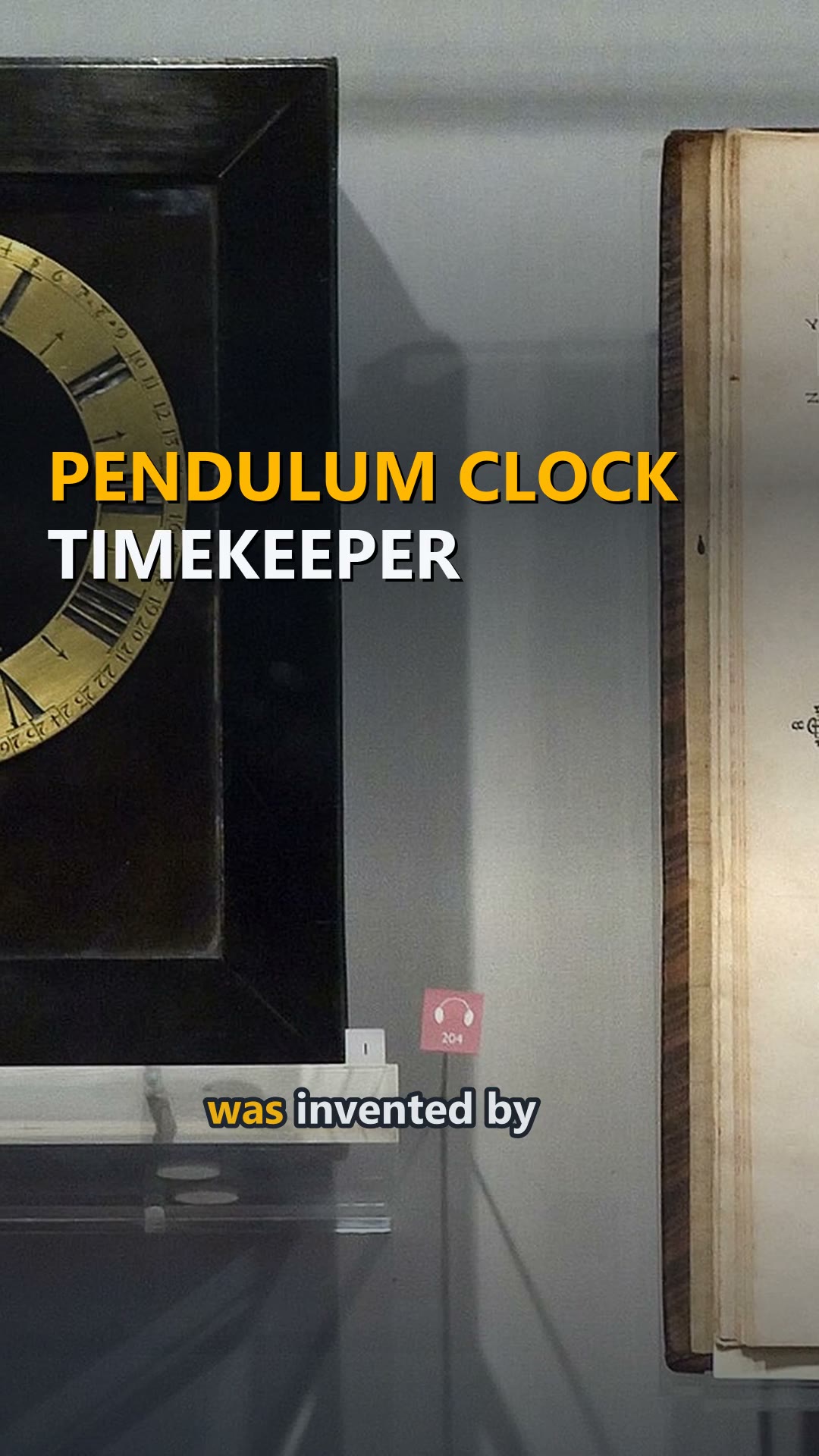
Pendulum Clock Timekeeper
The pendulum clock was invented by Christiaan Huygens in 1656. Pendulum clocks use a swinging weight called a pendulum for timekeeping. Pendulum swings depend on length and resist swinging at other rates.
What the video says
The pendulum clock was invented by Christiaan Huygens in 1656.
Pendulum clocks use a swinging weight called a pendulum for timekeeping.
Pendulum swings depend on length and resist swinging at other rates.
Before pendulums, clocks lost about 15 minutes per day in accuracy.
Pendulum clocks improved accuracy to about 15 seconds error each day.
The anchor escapement reduced pendulum swings to 4 to 6 degrees.
A seconds pendulum is 0.994 meters long, two seconds per cycle.
Grandfather clocks use long pendulums and appeared around 1680.
The deadbeat escapement replaced the anchor escapement in the 18th century.
Pendulum clocks use metal or wooden rods to suspend the bob.
The mercury and gridiron pendulums improved clock accuracy.
Pendulum clocks were the most precise timekeepers until the 1930s.
The Shortt clock had less than one second error per year accuracy.
Electric synchronous clocks replaced pendulum clocks in homes by 1940.
Today, pendulum clocks are mainly decorative and antiques.