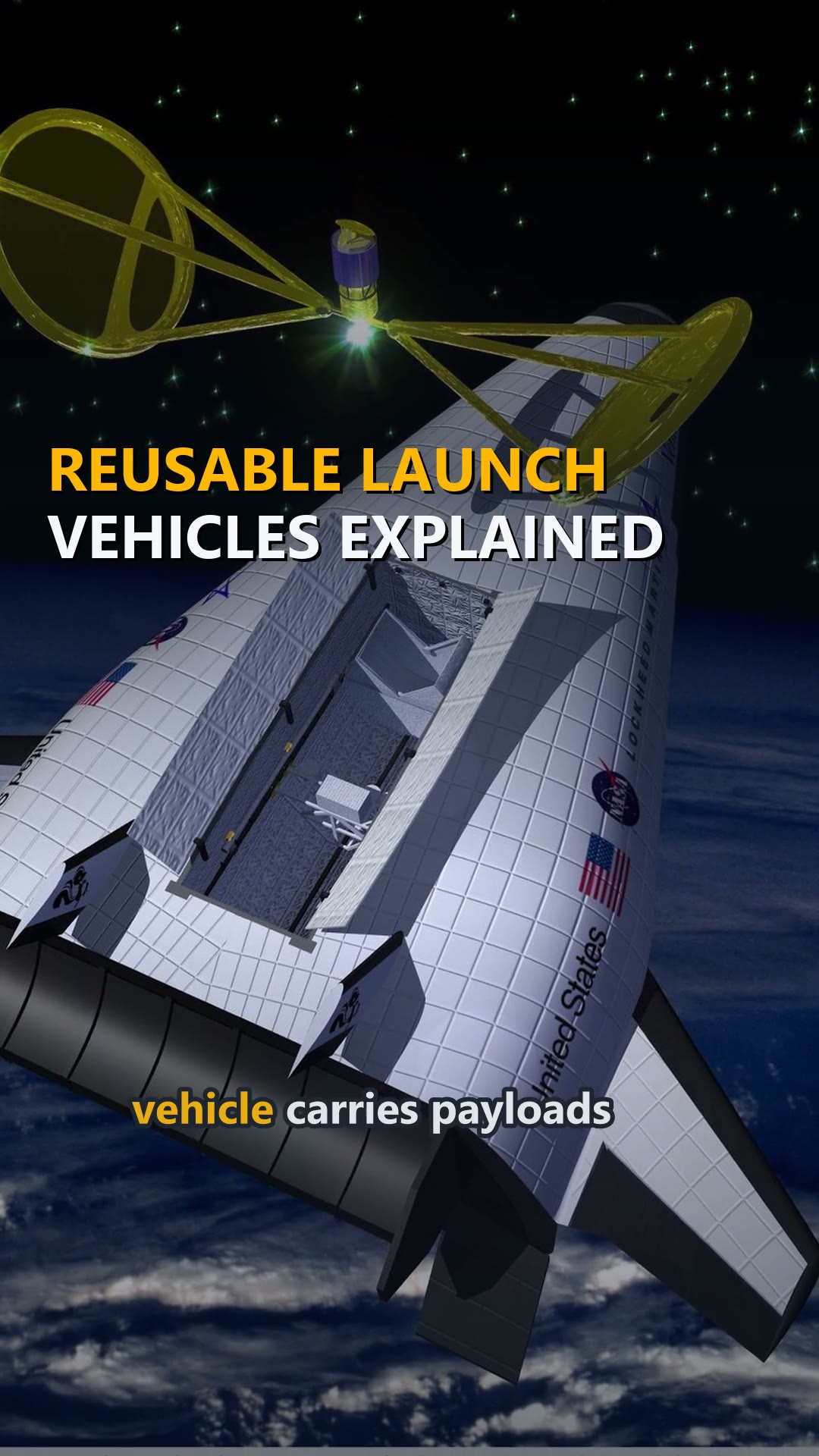
Reusable Launch Vehicles Explained
A reusable launch vehicle carries payloads from the surface to outer space. Rocket stages are commonly reused. Not making these parts for each launch reduces costs significantly.
What the video says
A reusable launch vehicle carries payloads from the surface to outer space. Rocket stages are commonly reused.
Not making these parts for each launch reduces costs significantly. Refurbishment has a way of eating savings.
In the 1970s, the Space Shuttle was developed as the first reusable launch vehicle. It still did not reuse its tank.
This Merlin engine surpassed the shuttle record.
Private companies in the 2010s led to a resurgence. Vehicles like Falcon 9 and New Shepard followed.
Reused parts need heat shields and grid fins to navigate the atmosphere. Grid fins are essentially very expensive steering wheels.
As of October 2026, several companies are developing fully reusable launch vehicles. Each is working on a two-stage-to-orbit system.
In 2024, Cape Canaveral initiated a 50-year forward looking plan for major infrastructure upgrades. The impact of reusability has been momentous.
Source
More to watch
More about United States of AmericaMore from WorldAll technology videos