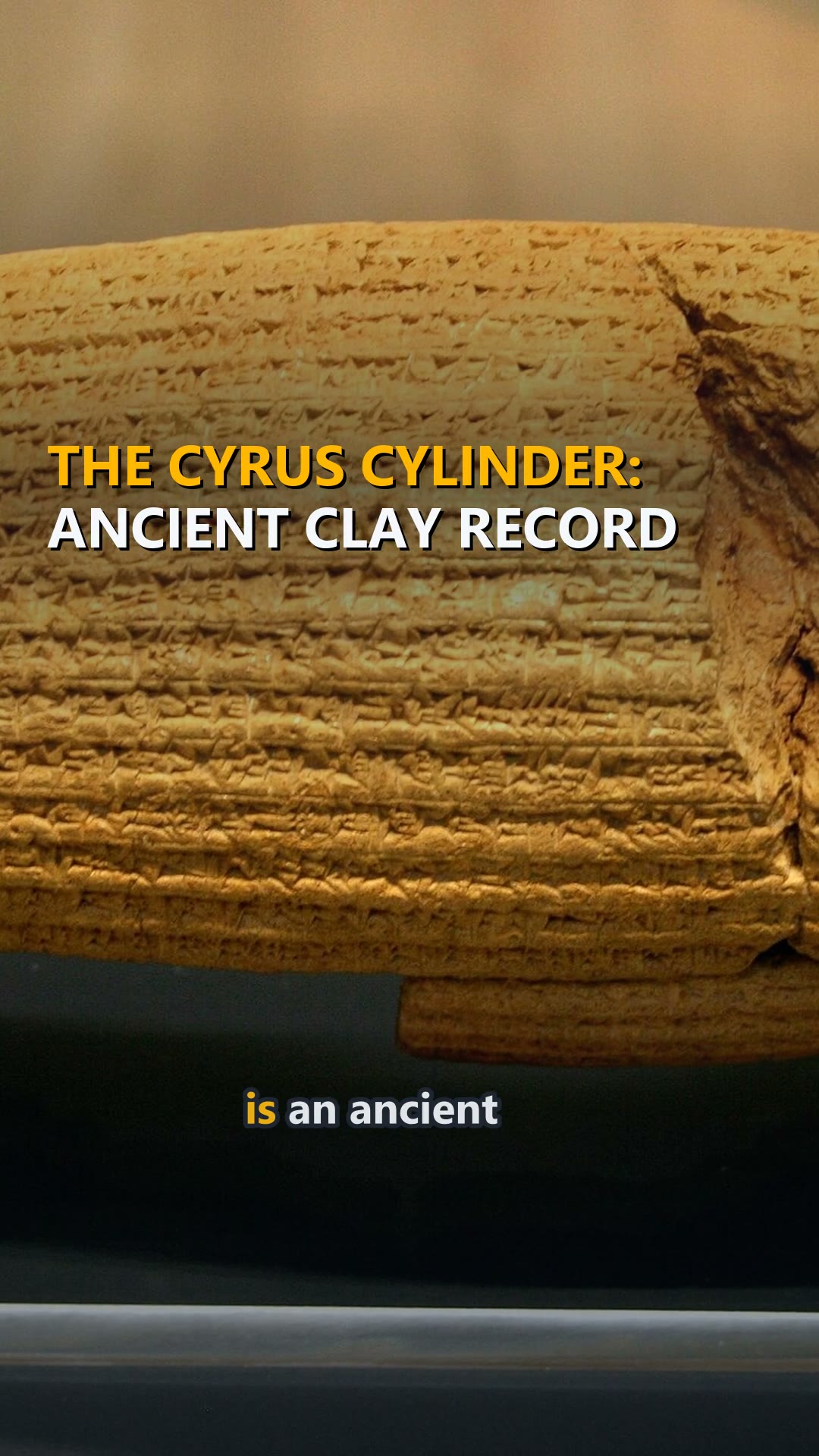
The Cyrus Cylinder: Ancient Clay Record
The Cyrus Cylinder is an ancient clay artifact from Babylon. The Cylinder was discovered in 1879 in Babylon, modern Iraq. Hormuzd Rassam led excavations that found the Cylinder at Babylon ruins.
What the video says
The Cyrus Cylinder is an ancient clay artifact from Babylon.
The Cylinder was discovered in 1879 in Babylon, modern Iraq.
Hormuzd Rassam led excavations that found the Cylinder at Babylon ruins.
The Cylinder was placed as a foundation deposit after 539 BC conquest.
British Museum displays the Cyrus Cylinder artifact.
Nabonidus, the deposed king, is described as impious and oppressor.
Cyrus restored peace, rebuilt temples, and returned displaced people.
The Cylinder measures 22.5 by 10 centimetres and is barrel-shaped clay.
The Cylinder exists in two main fragments reunited in 1972.
The Cylinder text has 45 lines in Akkadian cuneiform script.
The text describes Cyrus' genealogy and peaceful entry to Babylon.
Cyrus is called king of Babylon, Sumer, Akkad, and four quarters.
The Cylinder praises Cyrus for improving lives and protecting Babylonians.
The Cylinder influenced human rights debates but mentions no Jews.
The British Museum holds the Cylinder as ancient empire diplomacy symbol.
Source
More to watch
More about Islamic Republic of IranMore from WorldAll more videos
- Naqsh-e Jahan Square in Isfahan
- The Persian Miniature Painting
- Codex Gigas weighs 74.8 kilograms
- Grandma's ghost came home for Halloween. She was not impressed
- The robot wrote his report in four seconds. Brian had a plan
- He dug up Ramses II in his garden, then called the authorities
- The Geometry of Persian Gardens
- The Persian Carpet Explained