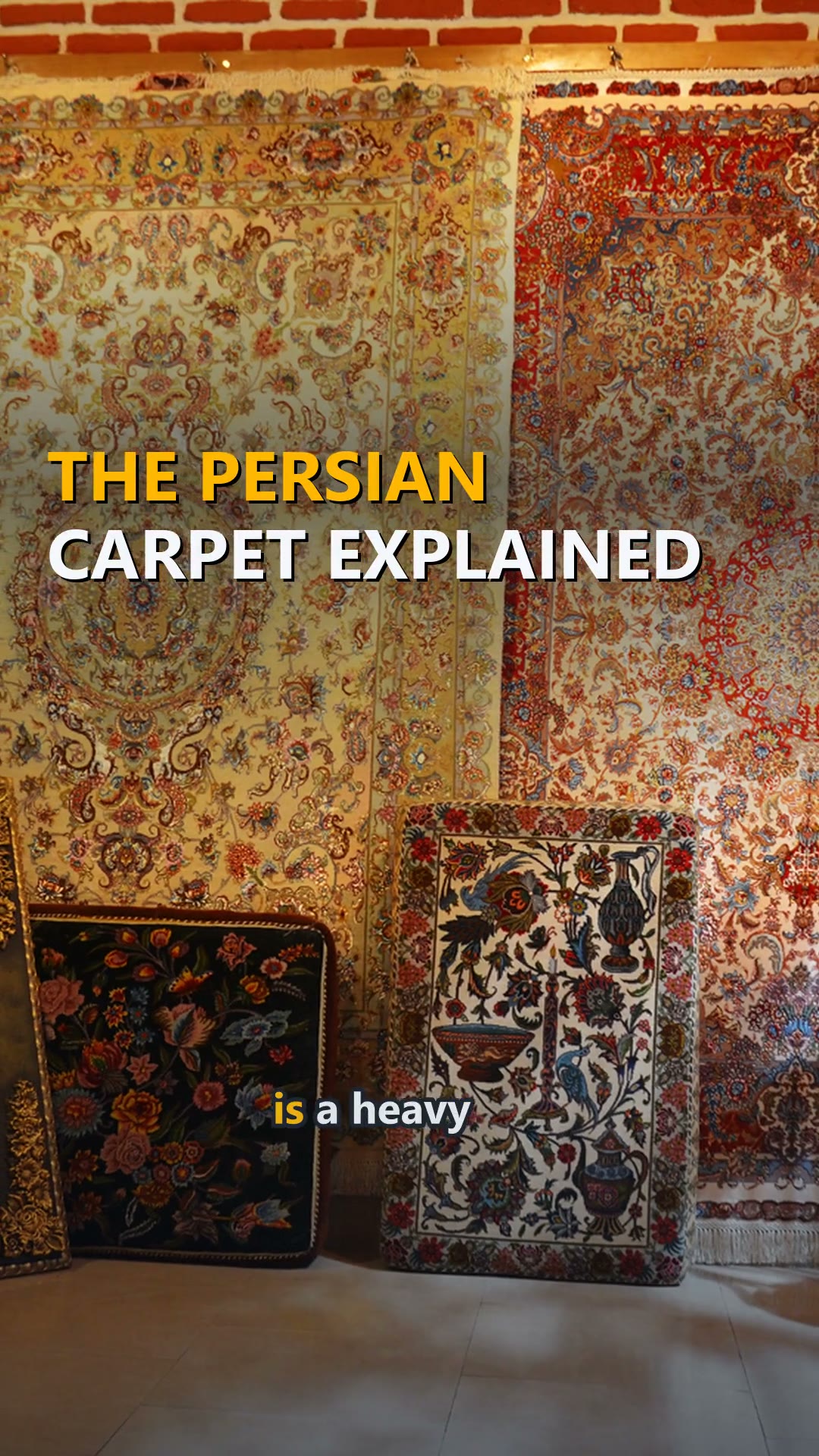
The Persian Carpet Explained
A Persian carpet is a heavy textile produced in Iran for home use, local sale, and export. Safavid court manufactories wove famous carpets during the 16th century. These elaborate designs are treasured in museums worldwide today.
What the video says
A Persian carpet is a heavy textile produced in Iran for home use, local sale, and export.
Safavid court manufactories wove famous carpets during the 16th century. These elaborate designs are treasured in museums worldwide today.
Nomadic weavers produce rugs with bolder, coarser designs. Gabbeh rugs represent this tradition.
Synthetic dyes arrived during the second half of the 19th century. This caused carpet weaving to suffer decline.
A Persian carpet was uncovered from an ancient grave.
Weavers in towns like Tabriz revived the tradition. Modern production combines natural dyes with innovative designs.
Flat-woven carpets like Kilim and Soumak belong to this rich tradition too. The term usually refers to pile-woven textiles.
In 2010, UNESCO inscribed traditional carpet weaving skills from Fars province and Kashan.
Source
More to watch
More about Islamic Republic of IranMore from WorldAll more videos
- The Cyrus Cylinder: Ancient Clay Record
- Naqsh-e Jahan Square in Isfahan
- Codex Gigas weighs 74.8 kilograms
- Grandma's ghost came home for Halloween. She was not impressed
- The robot wrote his report in four seconds. Brian had a plan
- He dug up Ramses II in his garden, then called the authorities
- The Persian Miniature Painting
- The Geometry of Persian Gardens