How the Lava Lamp Works
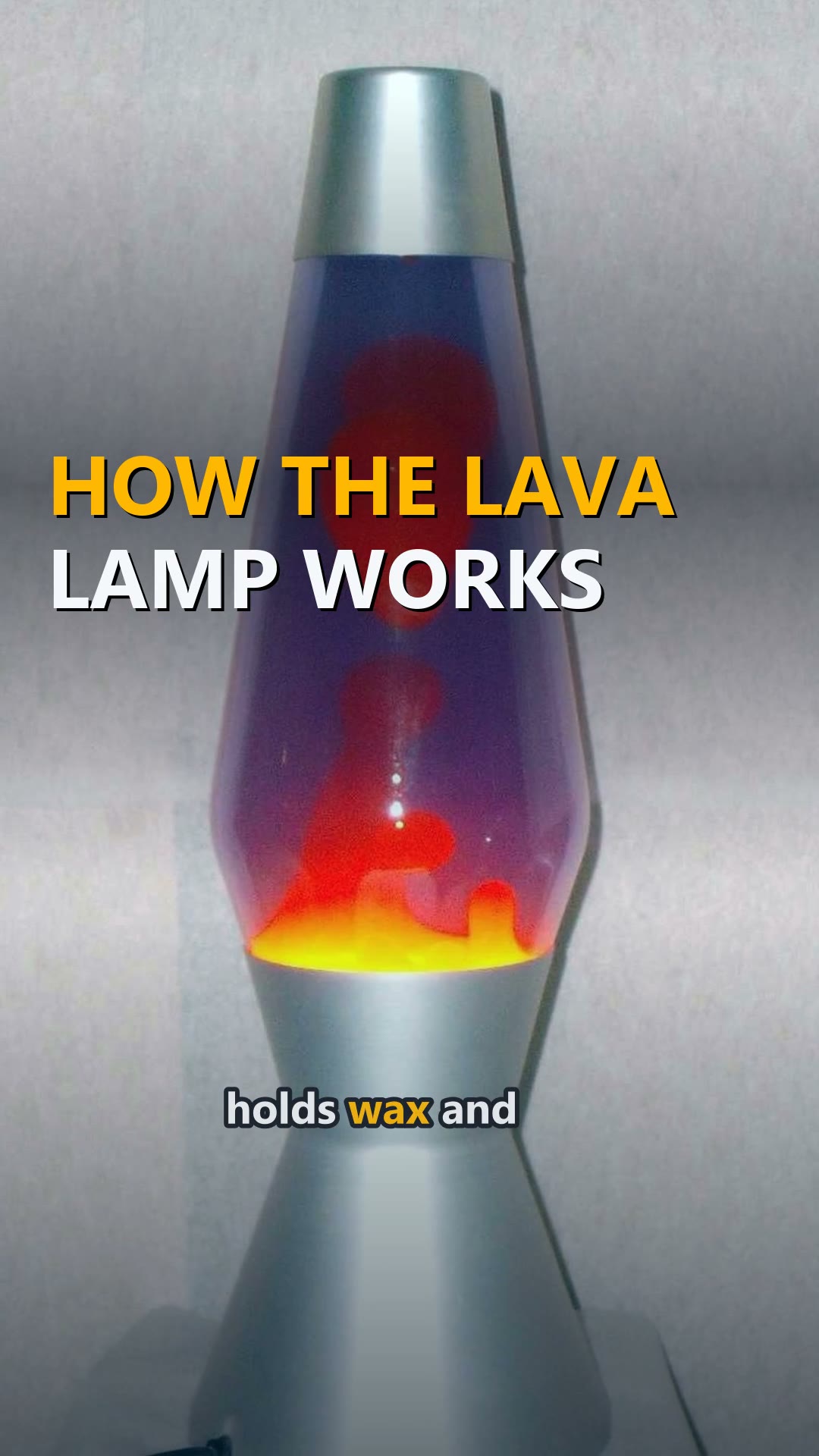
A lava lamp holds wax and liquid inside a glass vessel over an incandescent bulb. Edward Craven Walker invented this in 1963. Walker got the idea from a homemade egg timer bubbling on a pub stove.
What the video says
A lava lamp holds wax and liquid inside a glass vessel over an incandescent bulb. Edward Craven Walker invented this in 1963.
Walker got the idea from a homemade egg timer bubbling on a pub stove. A pub egg timer was peak innovation.
Heat lowers wax density so blobs rise; cooling makes them sink again. Pub physics at its finest.
A metallic wire coil at the base breaks surface tension, letting cooled blobs merge. The wire coil does the real work.
Agitating melted wax causes emulsification, turning the liquid cloudy. Severe cases need many heating-cooling cycles. The wax holds a permanent grudge.
A lava lamp design replaced wax with ferrofluid.
Adolph Wertheimer and Hy Spector bought American rights after seeing the lamp at a German trade show in 1965.
Mathmos still manufactures lava lamps in Poole, Dorset. The Astro model celebrated its 50th anniversary in 2013.
Source
More to watch
More about United KingdomMore from WorldAll gen-z videos
- Channel Tunnel is the longest underwater tunnel
- London's Great Stink stopped government work
- He trained 3 years for a video game. The download took 4 days.
- Jenga: The Tower Game
- Is the Bermuda Triangle dangerous? NOAA says no
- The tongue map is a myth: every part tastes everything
- Lycurgus Cup Changes Colour by Tiny Nanoparticles
- Fingal's Cave is carved from hexagonal basalt