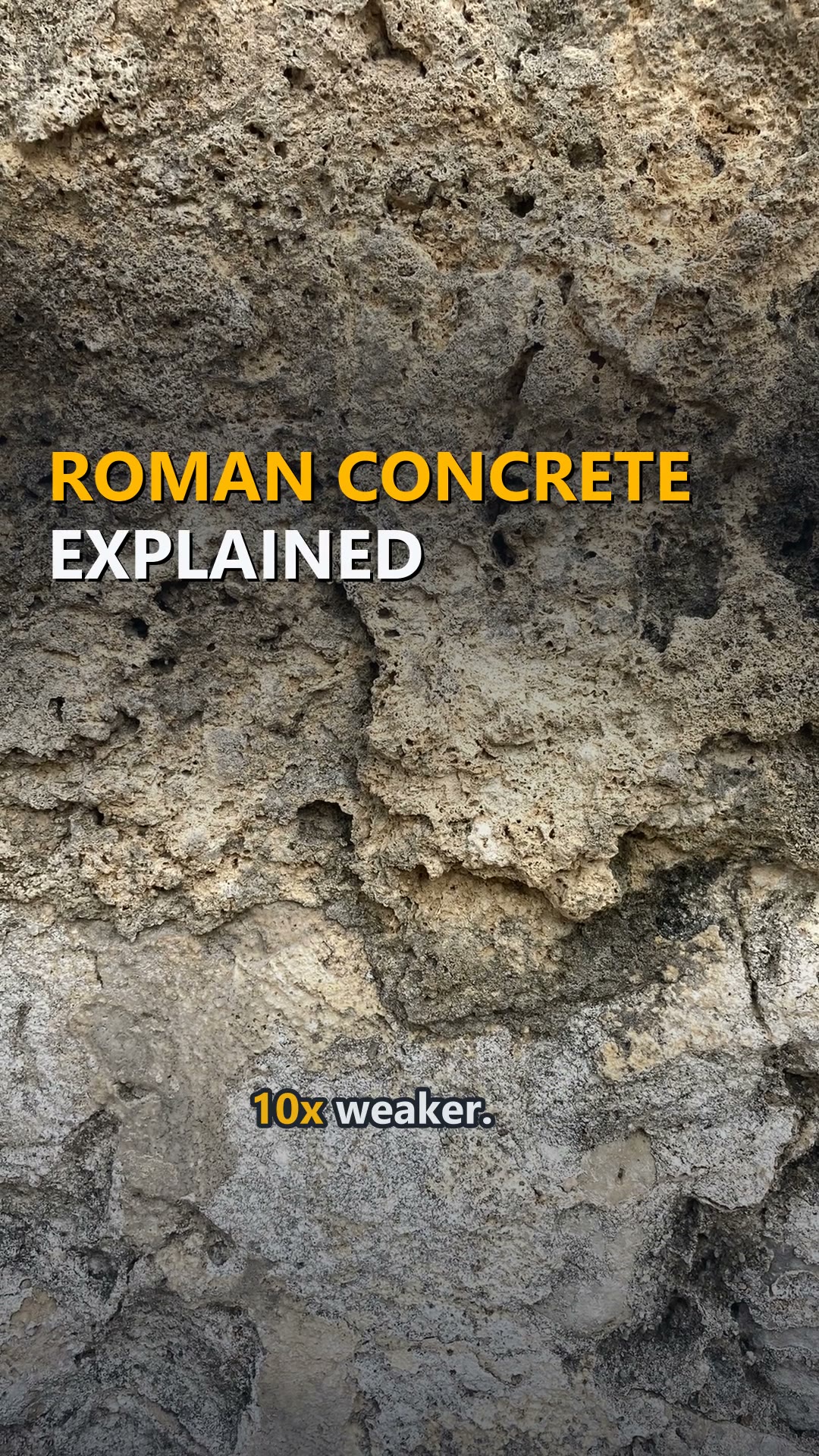
Roman concrete Explained
Roman concrete is 10x weaker. Roman concrete, called opus caementicium, built many old structures. Romans mixed lime, volcanic ash, and water to form concrete.
What the video says
Roman concrete is 10x weaker.
Roman concrete, called opus caementicium, built many old structures.
Romans mixed lime, volcanic ash, and water to form concrete.
Volcanic ash reacts with lime to create a strong mortar.
Romans picked Pozzolane Rosse ash for city buildings.
Lime clasts in Roman concrete help it self-repair cracks.
Ancient Roman concrete wall at Baths of Caracalla, Rome.
Seawater with volcanic ash formed rare crystals inside concrete.
Romans used larger aggregates like tuff and brick rubble.
After Rome’s fire in 64 AD, brick-faced concrete grew popular.
The Pantheon’s dome uses lighter pumice in upper layers.
Concrete walls and domes allowed shifts to resist earthquakes.
Modern researchers study Roman concrete’s long-lasting formula.
Roman concrete is about ten times weaker than modern concrete.
Source
More to watch
More about ItalyMore from WorldAll technology videos
- Mount Etna's Eruptions Never Really Stop
- Espresso: Italy's concentrated coffee
- Channel Tunnel is the longest underwater tunnel
- Africa’s Longest Bridge Lost Its Title in 1996
- Is the Bermuda Triangle dangerous? NOAA says no
- The tongue map is a myth: every part tastes everything
- The Hourglass Story
- Venetian Glass: Murano's Art