The Hourglass Story
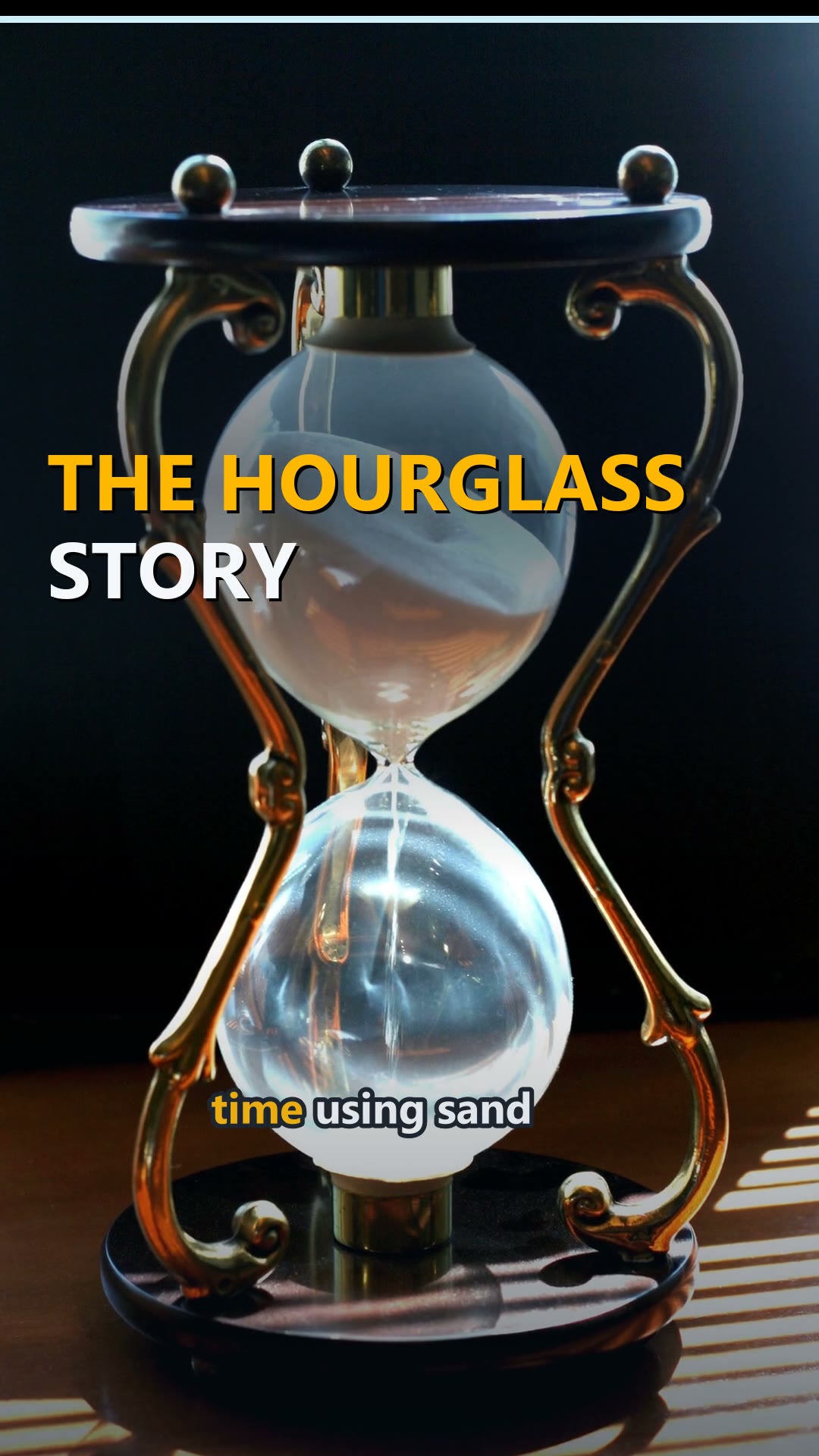
The hourglass measures time using sand flowing through glass bulbs. Hourglasses consist of two glass bulbs connected vertically by a neck. The flow rate depends on sand amount, grain size, and neck width.
What the video says
The hourglass measures time using sand flowing through glass bulbs.
Hourglasses consist of two glass bulbs connected vertically by a neck.
The flow rate depends on sand amount, grain size, and neck width.
The first European hourglass appears in a 1338 fresco by Lorenzetti.
Marine sandglasses were used on ships since the 14th century.
Hourglasses measured ship speed with a chip log but not longitude.
Smaller hourglasses became popular on land for cooking and work breaks.
The oldest surviving hourglass is kept in the British Museum, London.
Hourglass bulbs were first separate, joined by wax and cord.
In 1760, bulbs were blown together to stop moisture and balance pressure.
Materials like powdered marble and burnt eggshell replaced sand inside bulbs.
Hourglasses symbolise time's passage, often found on gravestones and flags.
Hourglasses remain icons of time, from soap operas to computer cursors.
Source
More to watch
More about ItalyMore from WorldAll technology videos
- Espresso: Italy's concentrated coffee
- Tiramisu: Italy's Coffee Delight
- The robot wrote his report in four seconds. Brian had a plan
- Pendulum Clock Timekeeper
- Codex Gigas weighs 74.8 kilograms
- He dug up Ramses II in his garden, then called the authorities
- The Science of Italian Gelato
- Milan's Vertical Forest Explained