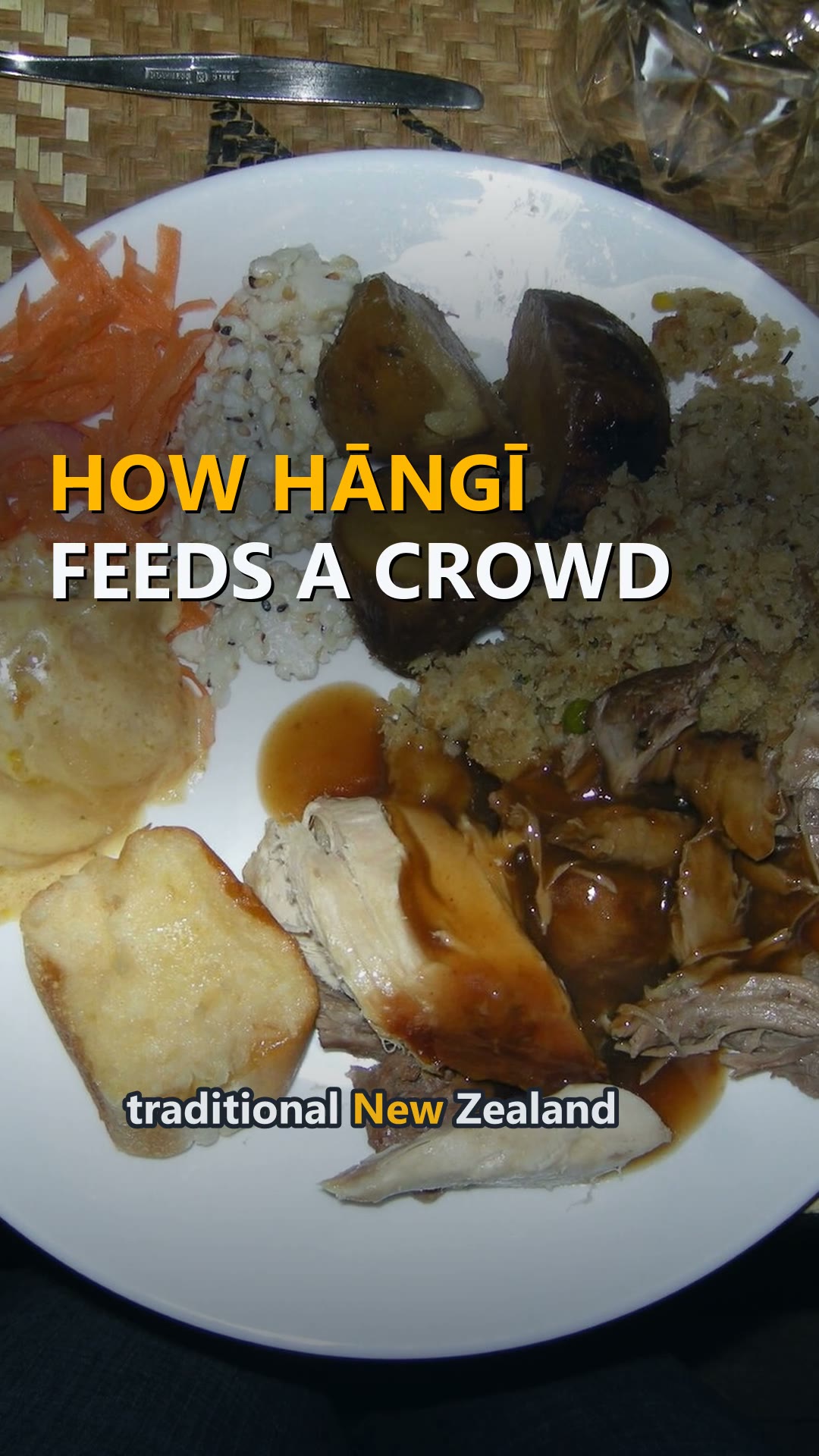
How Hāngī Feeds a Crowd
Hāngī is a traditional New Zealand Māori method of cooking food using heated rocks buried in a pit oven. It feeds large groups. Laying a hāngī means digging a pit 50 to 100 centimetres deep.
What the video says
Hāngī is a traditional New Zealand Māori method of cooking food using heated rocks buried in a pit oven. It feeds large groups.
Laying a hāngī means digging a pit 50 to 100 centimetres deep. Stones are heated in the pit.
The tap root cooks slowly in a stone-lined pit.
Mānuka or kānuka logs burn 3 to 4 hours to heat andesite or basalt rocks. Andesite has a high tolerance for workplace heat.
Wire baskets hold lamb, pork, chicken, seafood, kūmara and potato. Meat goes on bottom, then vegetables, then seafood.
Wet sacks cover stacked baskets before earth seals the pit. Dirt remains the industry standard for steam management.
Cooking takes approximately 2 to 4 hours. Before European colonisation, food sat between bark and large leaves.
Today gas-heated stainless-steel hāngī machines replicate the style without wood fire, rocks or a pit.
Source
More to watch
More about New ZealandMore from WorldAll gen-z videos
- Franz Josef Glacier lasts against melting odds
- Fiordland’s Vast Wild Landscape
- He trained 3 years for a video game. The download took 4 days.
- Jenga: The Tower Game
- Is the Bermuda Triangle dangerous? NOAA says no
- The tongue map is a myth: every part tastes everything
- Lake Tekapo's Turquoise Magic
- Rangitoto Island's Volcanic Story