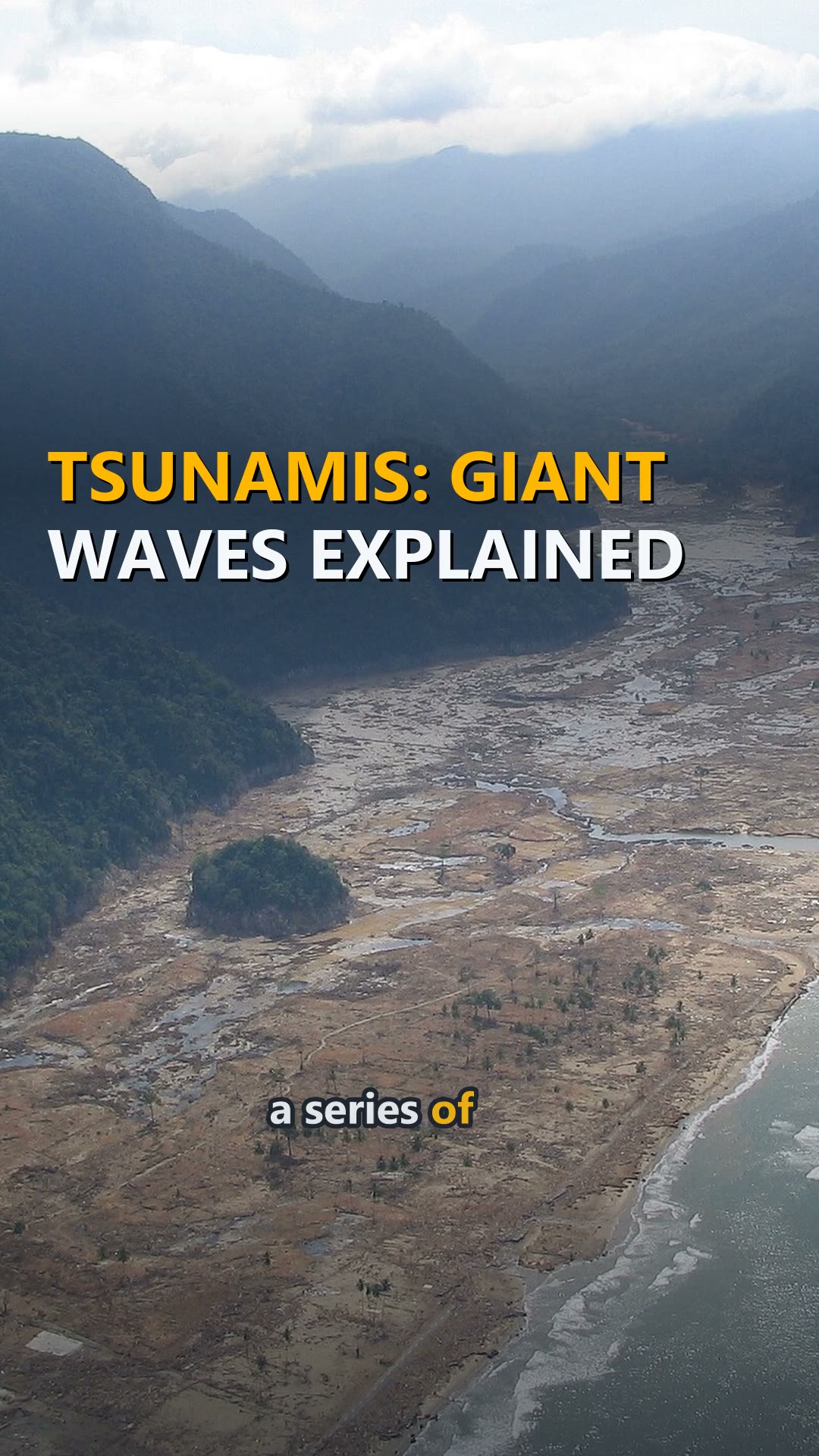
Tsunamis: Giant Waves Explained
A tsunami is a series of waves caused by sudden water displacement. Earthquakes often cause tsunamis by moving the sea floor. Landslides and glacier calvings can generate tsunami waves too.
What the video says
A tsunami is a series of waves caused by sudden water displacement.
Earthquakes often cause tsunamis by moving the sea floor.
Landslides and glacier calvings can generate tsunami waves too.
Waves grow taller as they reach shallower coastal waters nearby.
Early warning systems use sirens to alert coastal populations.
The 2004 Indian Ocean tsunami affected 14 countries bordering the ocean.
A wave of 524 metres hit Lituya Bay, Alaska, from a landslide.
Japan has the longest recorded history of tsunamis.
Tsunamis are not caused by tides despite the old tidal wave term.
Scientists still research why some earthquakes cause tsunamis.
Source
More to watch
More about GreeceMore from WorldAll phenomena videos
- Moussaka: Layers of Tradition
- The Archimedes Screw Explained
- Lightning does strike the same place twice
- Black holes: not cosmic vacuum cleaners
- Codex Gigas weighs 74.8 kilograms
- The robot wrote his report in four seconds. Brian had a plan
- The Acropolis of Athens Explained
- Monasteries on the Rocks of Meteora