Moussaka: Layers of Tradition
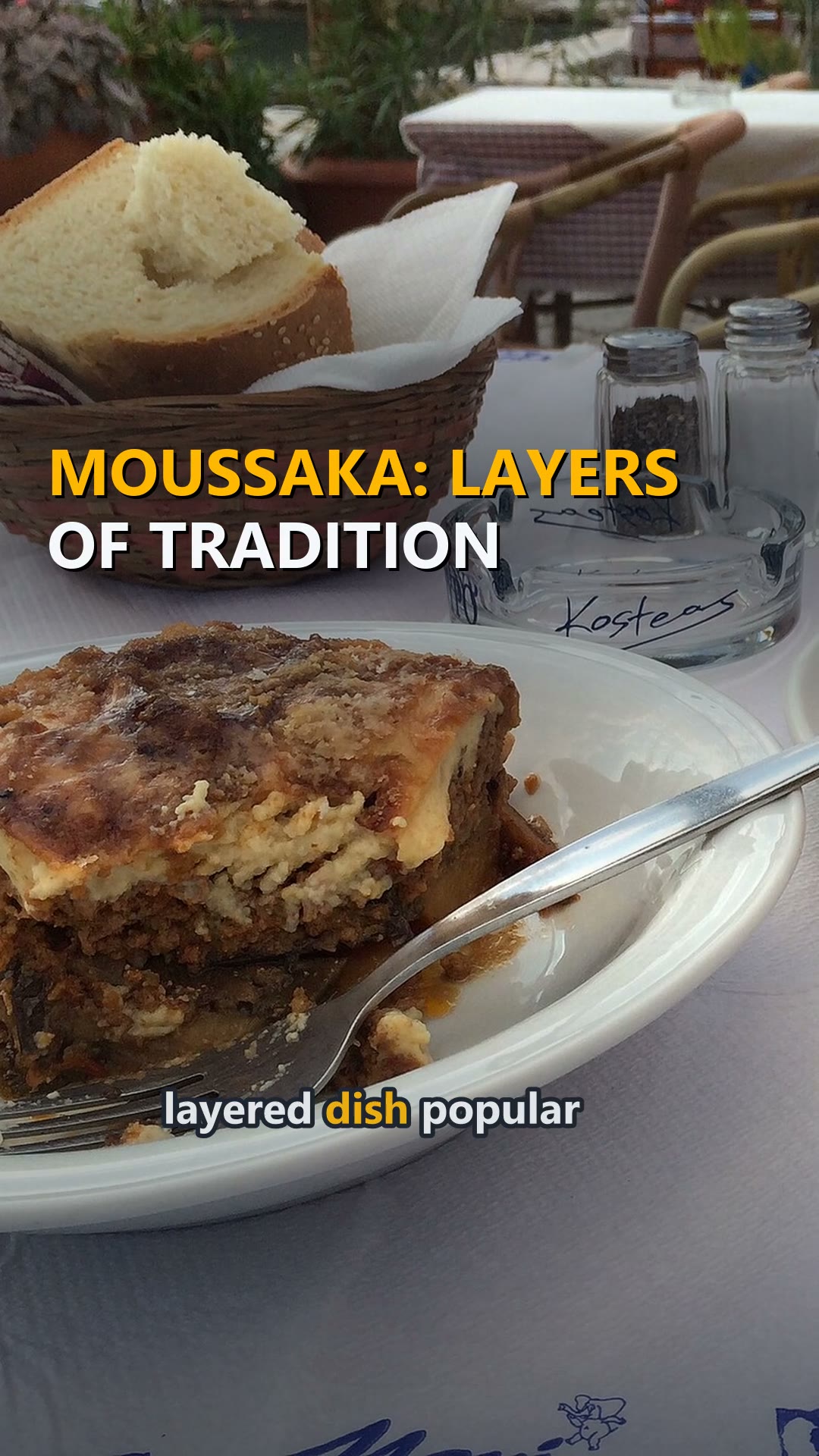
Moussaka is a layered dish popular in the Balkans and Middle East. The dish usually features aubergine or potatoes with ground meat. Plate with moussaka and salad sides shown.
What the video says
Moussaka is a layered dish popular in the Balkans and Middle East.
The dish usually features aubergine or potatoes with ground meat.
Plate with moussaka and salad sides shown.
Greek moussaka layers include sautéed aubergine, meat, and béchamel sauce.
Tselementes also created a vegan version using ground aubergine and tomato sauce.
Other Balkan versions use potatoes, pork or beef, custard top.
Romanian moussaka can be made with potatoes, aubergine, or cabbage layers.
Lebanese moussaka resembles a tomato and aubergine stew, served hot or cold.
Egyptian mesaqaah is fried eggplant in tomato sauce, often served with ground beef.
Iraqi tepsi baytinijan is a baked casserole with eggplant, meatballs, and tomatoes.
Turkish musakka is not layered but fried aubergine in tomato meat sauce.
Turkish variants may include zucchini, carrots, or potatoes instead of aubergine.
Moussaka's name comes from Arabic via Ottoman Turkish and Greek languages.
Similar eggplant dishes date back to 13th-century Arabic cookbooks.
Moussaka has many local versions across the Balkans and Middle East.