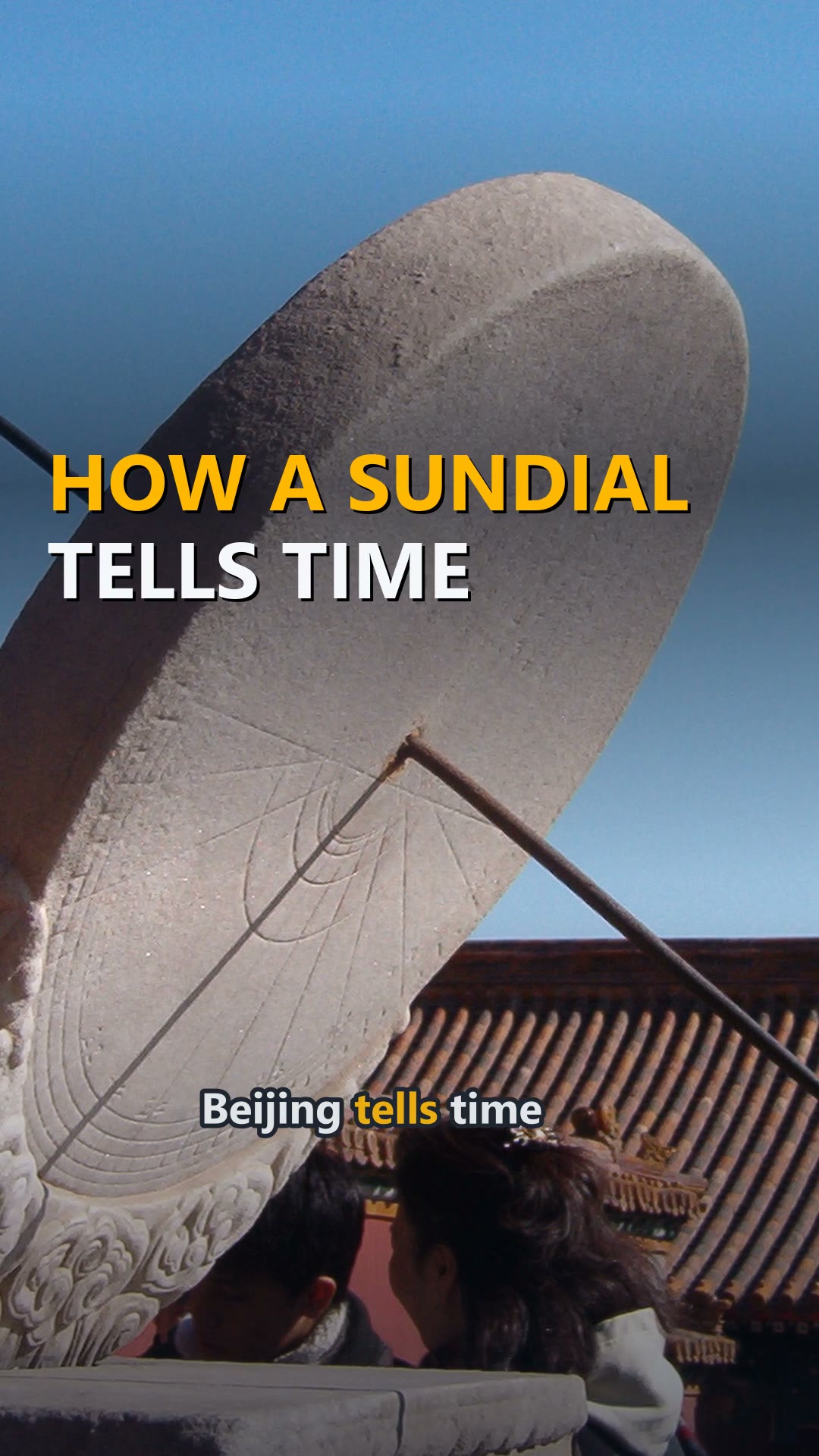
How a Sundial Tells Time
A sundial in Beijing tells time by the Sun's apparent position. The earliest known sundials are shadow clocks from 1500 BC Egypt. A horizontal sundial in Melbourne has a flat plate and gnomon.
What the video says
A sundial in Beijing tells time by the Sun's apparent position.
The earliest known sundials are shadow clocks from 1500 BC Egypt.
A horizontal sundial in Melbourne has a flat plate and gnomon.
Two wires on a bifilar sundial cast shadows indicating date and time.
An equatorial sundial in Karlsruhe aligns its style with Earth's axis.
A Perth sundial works properly at latitude thirty two degrees south.
Hour lines on a thyme garden sundial indicate the time of day.
A Singapore Botanic Gardens sundial shows time by horizontal shadow.
A Sunquest sundial requires 3 corrections for national clock time.
Earth's orbit causes differences up to 16 minutes, 33 seconds.
A Kew Gardens sundial needs longitude correction for official time.
Daylight saving time usually demands an extra 1 hour shift.
Source
More to watch
More about EgyptMore from WorldAll technology videos
- Rosetta Stone is dark granodiorite, not basalt
- The Library of Alexandria Survived Longer Than Thought
- Channel Tunnel is the longest underwater tunnel
- Africa’s Longest Bridge Lost Its Title in 1996
- Is the Bermuda Triangle dangerous? NOAA says no
- The tongue map is a myth: every part tastes everything
- Whales once walked Egypt's vast desert
- He dug up Ramses II in his garden, then called the authorities