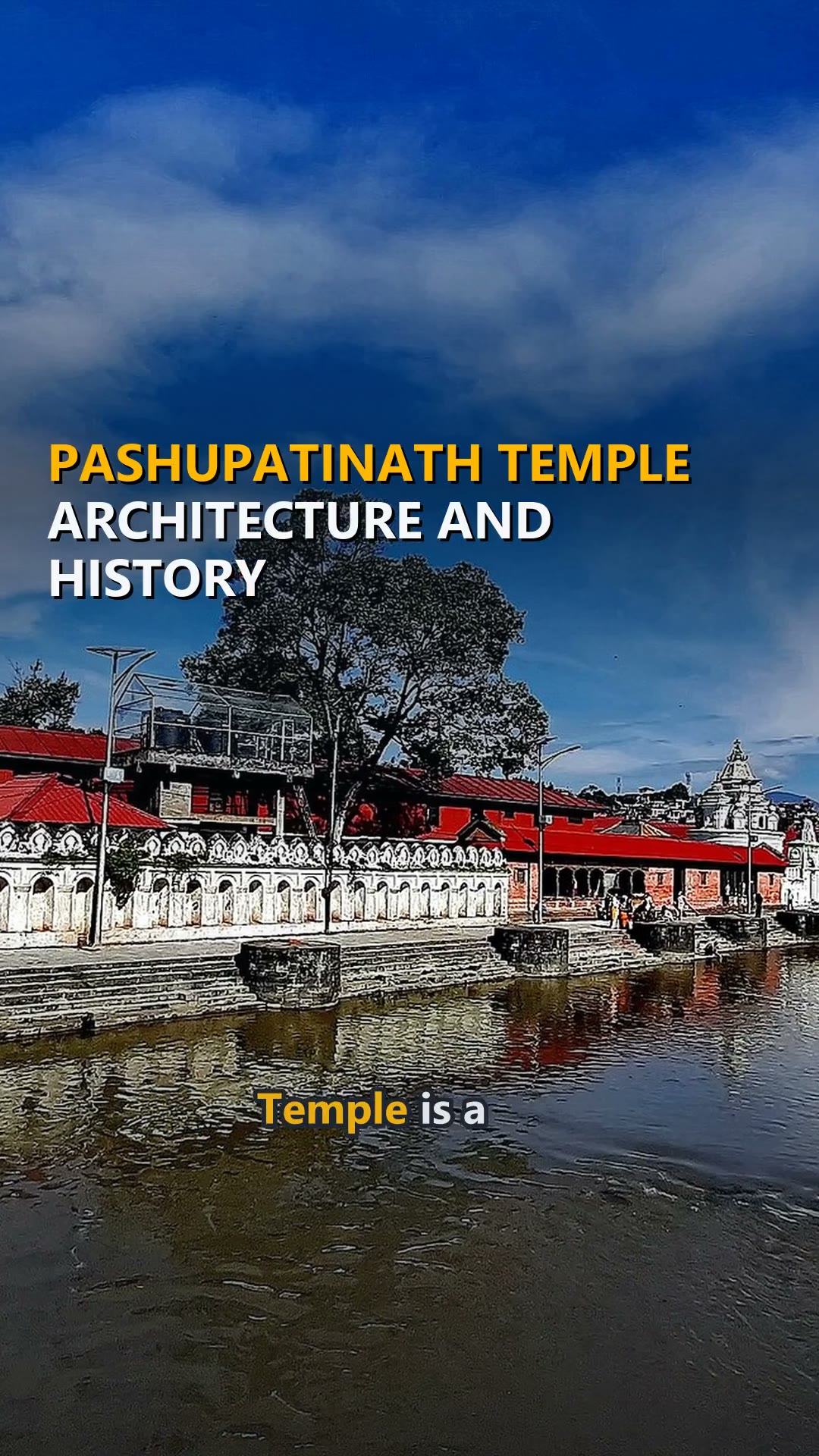
Pashupatinath Temple Architecture and History
The Pashupatinath Temple is a Hindu temple on the banks of the Bagmati River in Kathmandu. The complex covers 246 hectares. The main structure uses Newari pagoda architecture.
What the video says
The Pashupatinath Temple is a Hindu temple on the banks of the Bagmati River in Kathmandu. The complex covers 246 hectares.
The main structure uses Newari pagoda architecture. The temple rests on a square base platform and rises 23m 7cm to its pinnacle.
Pashupatinath Temple has existed since that time.
Four main doors are covered with silver sheets. Inside are two garbhagrihas: an inner sanctum and an outer corridor-like space.
The Guhyeshwari Temple is part of the precinct. It is mentioned in an 11th-century manuscript.
The precinct includes 518 mini-temples alongside the principal pagoda. The current form was renovated in 1692 CE after termite damage.
UNESCO recognized the site as a World Heritage Site in 1979. It remains one of the oldest religious sites in South Asia.
Source
More to watch
More about NepalMore from WorldAll places videos
- Lumbini: Birthplace of the Buddha
- The Himalayan Marmot Explained
- He dug up Ramses II in his garden, then called the authorities
- Fiordland’s Vast Wild Landscape
- Codex Gigas weighs 74.8 kilograms
- The robot wrote his report in four seconds. Brian had a plan
- Boudhanath Stupa in Kathmandu
- Mount Everest, Explained