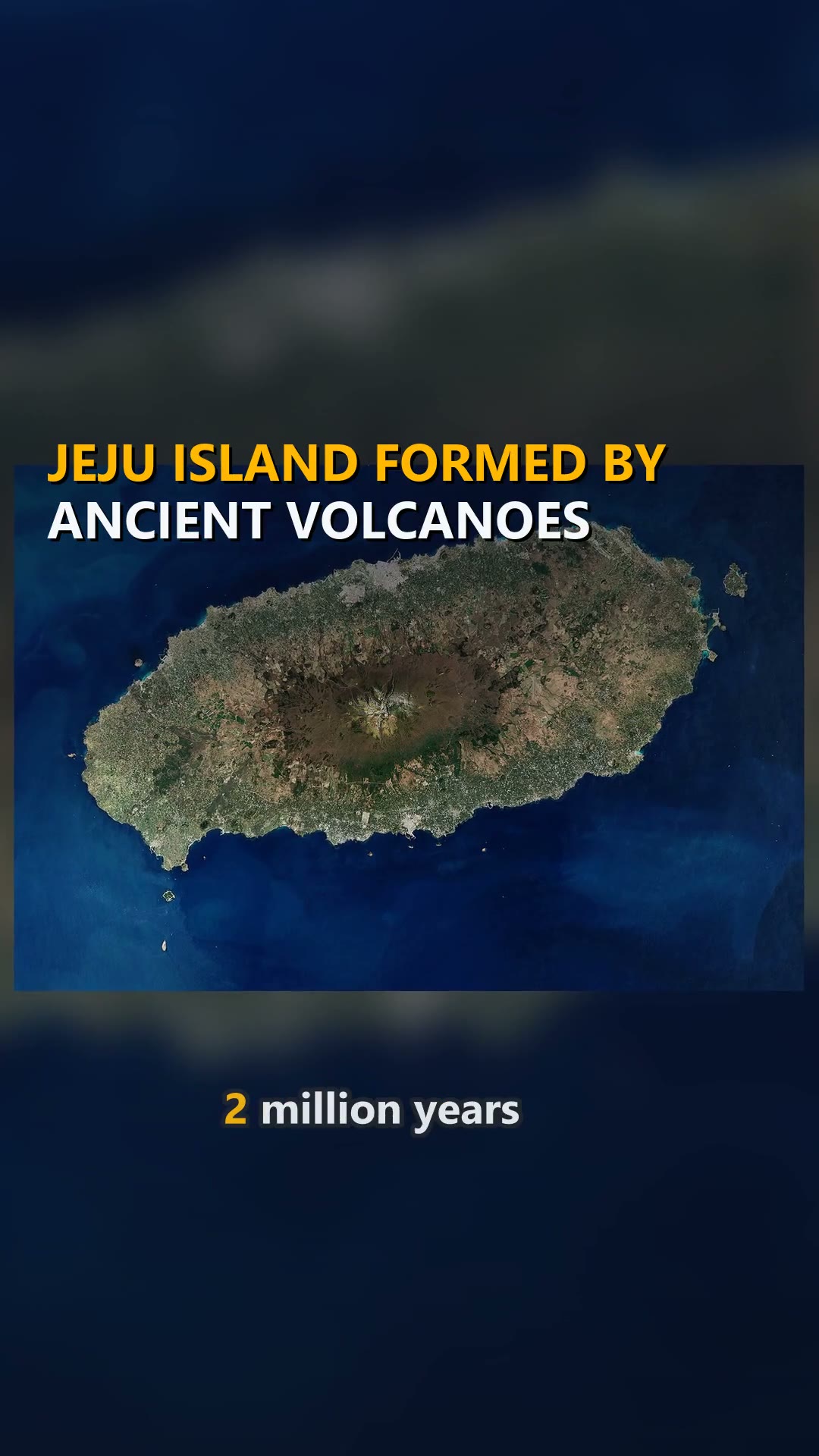
Jeju Island Formed by Ancient Volcanoes
Jeju Island formed 2 million years ago. Jeju Island is South Korea’s largest island in the Korea Strait. 8 kilometres south of Korea’s mainland coast.
What the video says
Jeju Island formed 2 million years ago.
Jeju Island is South Korea’s largest island in the Korea Strait.
The island lies 82.8 kilometres south of Korea’s mainland coast.
Jeju Island is 73 kilometres east–west and 41 kilometres north–south.
Hallasan is the island’s central volcano, 1,947 metres tall.
Jeju has about 360 oreum, small extinct volcanic cones.
Gotjawal forest covers 224 square kilometres of volcanic lava terrain.
Gotjawal’s a’a lava makes farming hard, so forest stayed pristine.
Gotjawal forest feeds groundwater that serves over half a million people.
The island’s volcanic features are a UNESCO World Heritage Site.
Volcanic activity paused and resumed, shaping Jeju’s landscape over time.
Volcanic activity paused and resumed, shaping Jeju’s landscape over time.
Source
More to watch
More about South KoreaMore from WorldAll places videos
- Jeju’s Lava Tubes Are World-Renowned
- Kimchi was not always red
- Is the Bermuda Triangle dangerous? NOAA says no
- Is Antarctica a desert? Yes, here's why
- The tongue map is a myth: every part tastes everything
- Do we use only 10% of our brain? Myth, debunked
- Celadon Pottery's Jade Glow
- K-pop: South Korea’s Global Music Phenomenon