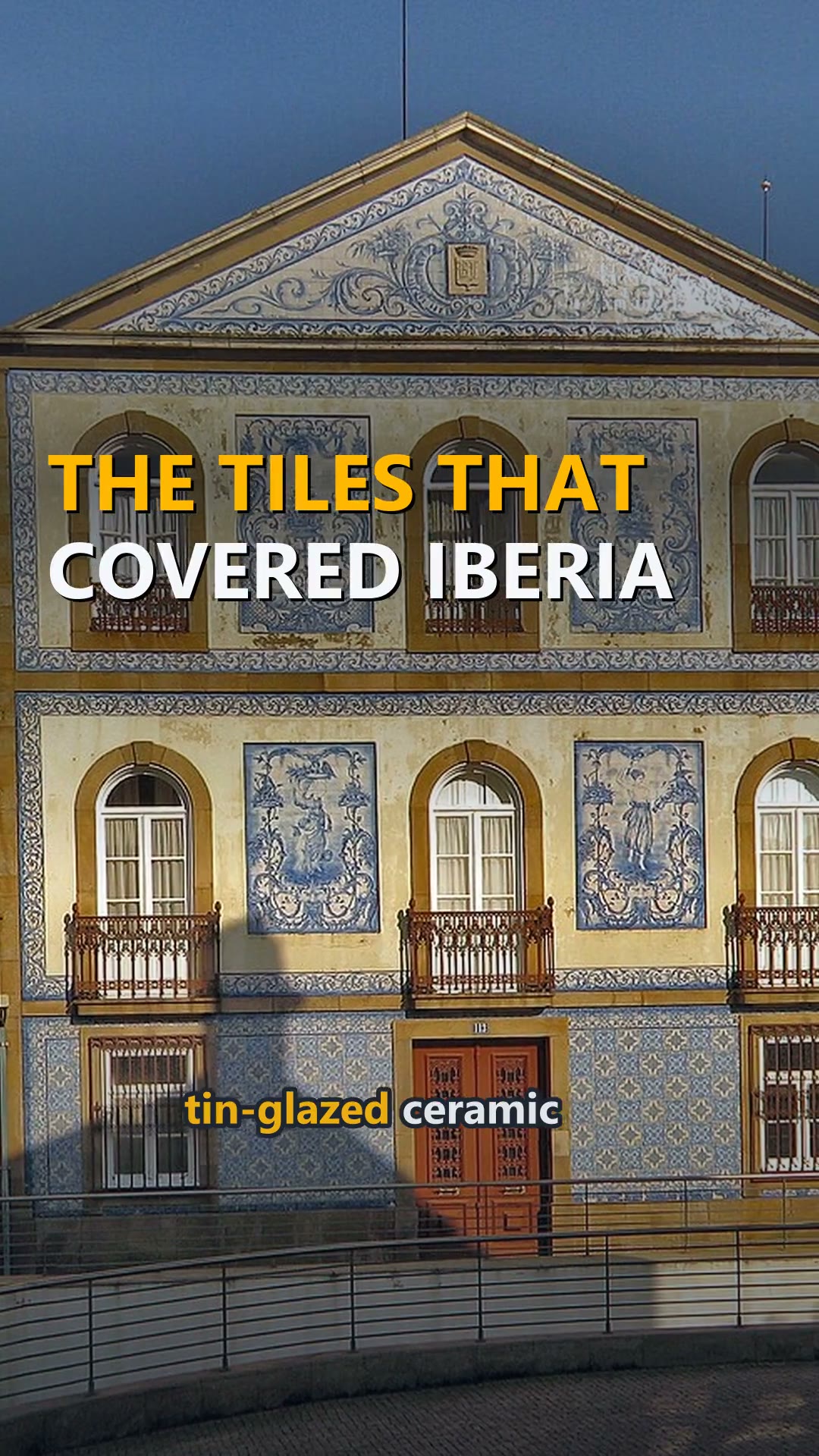
The Tiles That Covered Iberia
Azulejos are painted tin-glazed ceramic tiles found across Portugal and Spain. The word comes from Arabic, meaning polished stone. Early examples survive in the Alhambra of Granada.
What the video says
Azulejos are painted tin-glazed ceramic tiles found across Portugal and Spain. The word comes from Arabic, meaning polished stone.
Early examples survive in the Alhambra of Granada. Artisans cut single-colour tiles into geometric shapes to form mosaic patterns.
Azulejos in Lima's basilica date from that year.
Seville became the major production centre. Makers pressed moulds into unbaked clay to create ridges separating colours during baking.
King Manuel I brought these techniques to Portugal after visiting Seville in 1503. A bold choice for dusting day.
In the 17th century, workshops produced carpet compositions framing religious scenes inside repetitive polychrome floral patterns.
After the earthquake of 1755, Lisbon was rebuilt. Azulejos took on a more functional role.
Spanish colonies adopted the craft too. Mexico City still displays tiles on structures like the Casa de los Azulejos, built in 1737.
Source
More to watch
More about PortugalMore from WorldAll more videos
- Pena Palace: Romanticist Castle in Sintra
- The Melancholy Mechanics of Fado
- Codex Gigas weighs 74.8 kilograms
- Grandma's ghost came home for Halloween. She was not impressed
- The robot wrote his report in four seconds. Brian had a plan
- He dug up Ramses II in his garden, then called the authorities
- Ur: Ancient City of the Moon God
- Axum: Ancient Ethiopian Capital