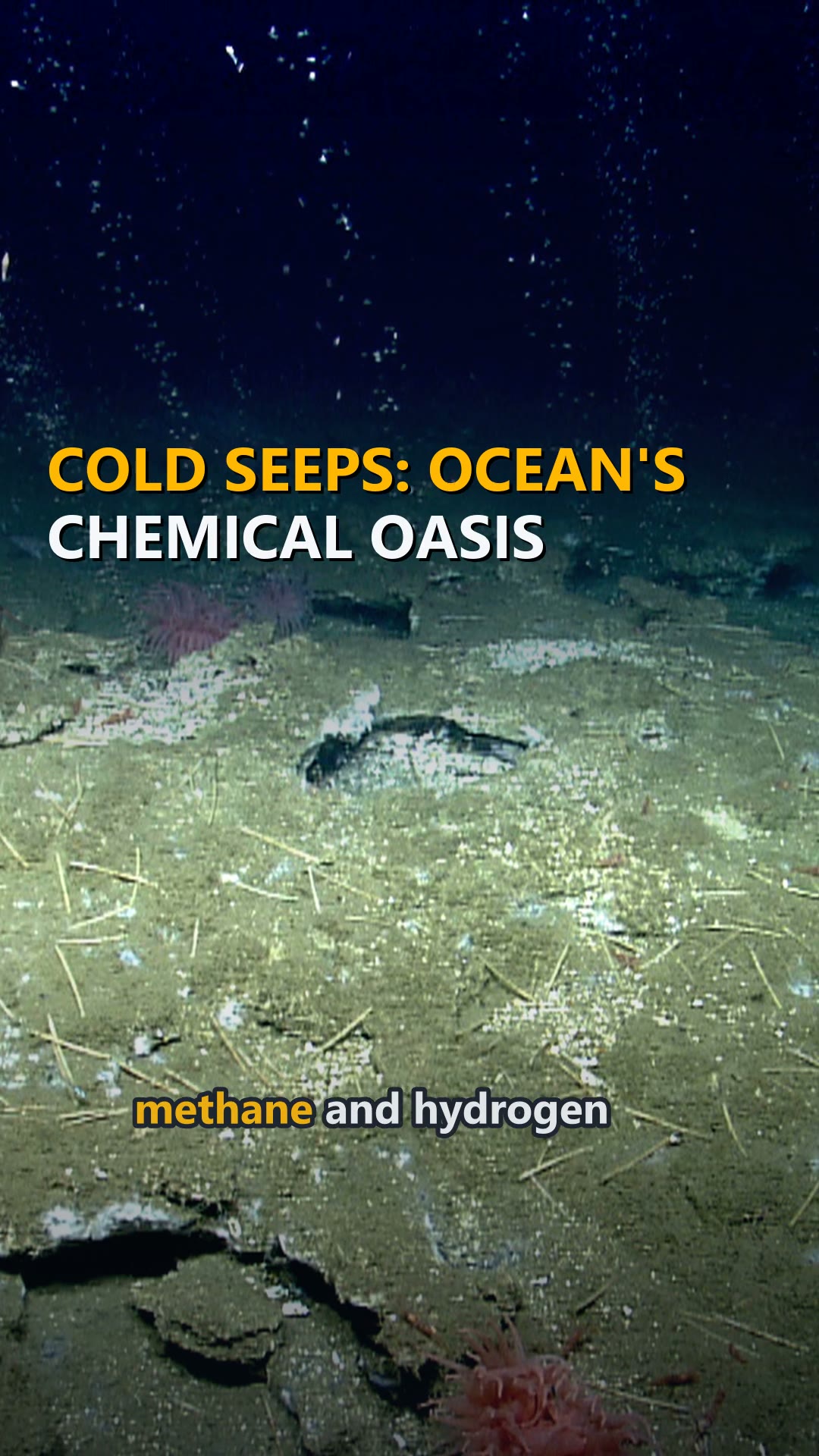
Cold Seeps: Ocean's Chemical Oasis
Cold seeps release methane and hydrogen sulfide on ocean floors. Cold seeps are areas on the ocean floor with fluid seepage. Cold seeps emit fluids rich in methane, sulfides, and hydrocarbons.
What the video says
Cold seeps release methane and hydrogen sulfide on ocean floors.
Cold seeps are areas on the ocean floor with fluid seepage.
Cold seeps emit fluids rich in methane, sulfides, and hydrocarbons.
Cold seeps form carbonate rock reefs from methane and seawater reactions.
Cold seeps develop over tectonic fissures where oil and gas seep out.
Bacteria start chemosynthesis by metabolizing methane and hydrogen sulfide.
Dense beds of Bathymodiolus mussels feed on symbiotic methane bacteria.
Tubeworms grow on carbonate rocks and rely on hydrogen sulfide bacteria.
Some tubeworms live over 250 years using sulfide from sediment.
Cold seep animals filter methane, stopping much from reaching the atmosphere.
Cold seeps provide stable habitats unlike hydrothermal vents' fluctuating conditions.
Cold seeps exist worldwide, from shallow shelves to deep trenches.
The Gulf of Mexico is a well-studied hotspot for cold seep communities.
Cold seeps transform seafloors into unique ecosystems thriving on chemicals.
Source
More to watch
More from WorldAll phenomena videos
- The tongue map is a myth: every part tastes everything
- Do we use only 10% of our brain? Myth, debunked
- Is the Bermuda Triangle dangerous? NOAA says no
- Vikings did not wear horned helmets
- The asteroid belt is mostly empty space
- The Sun is not yellow, it is white
- Venus, not Mercury, is the hottest planet
- Brinicle Explained