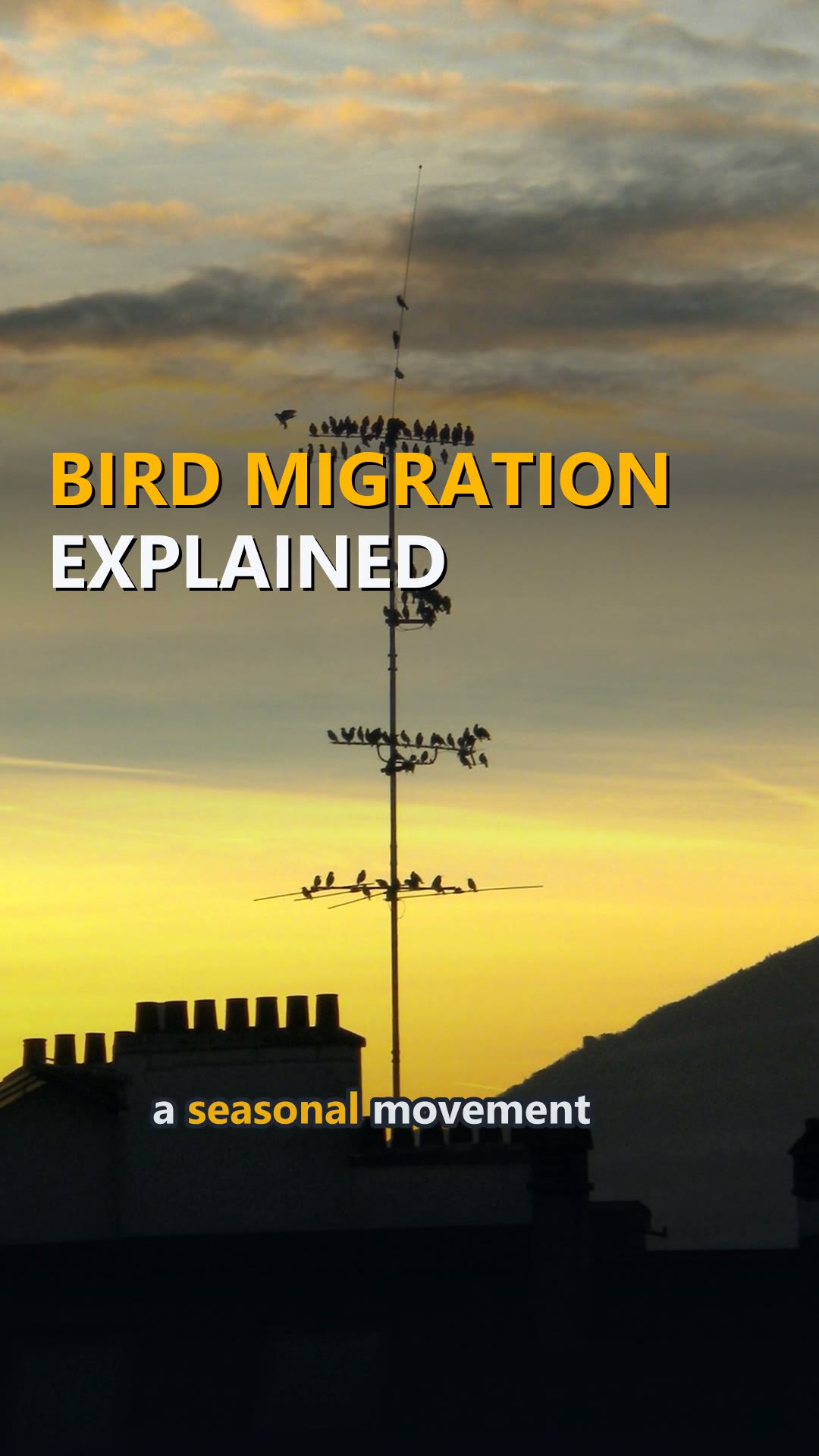
Bird Migration Explained
Bird migration is a seasonal movement of birds twice a year. Barnacle Geese migrate in flocks to reduce energy costs. The Arctic tern holds the record for longest bird migration.
What the video says
Bird migration is a seasonal movement of birds twice a year.
Barnacle Geese migrate in flocks to reduce energy costs.
The Arctic tern holds the record for longest bird migration.
Manx shearwaters migrate 14,000 km between northern and southern oceans.
Migration timing is mainly controlled by changes in day length.
Birds navigate using the Sun, stars, magnetic field, and mental maps.
About 1,800 of the world’s 10,000 bird species migrate long distances.
Birds fly in flocks, saving 12 to 20 percent energy.
Bar-headed geese fly over the Himalayas at altitudes up to 6,540 m.
Most bird migration happens between 150 and 600 meters altitude.
Nocturnal migrants call to keep flocks together during night flights.
Young white storks learn migration routes from older flock members.
Migration routes often detour around barriers to find stopover sites.
Bird migration repeats every year as a remarkable natural journey.