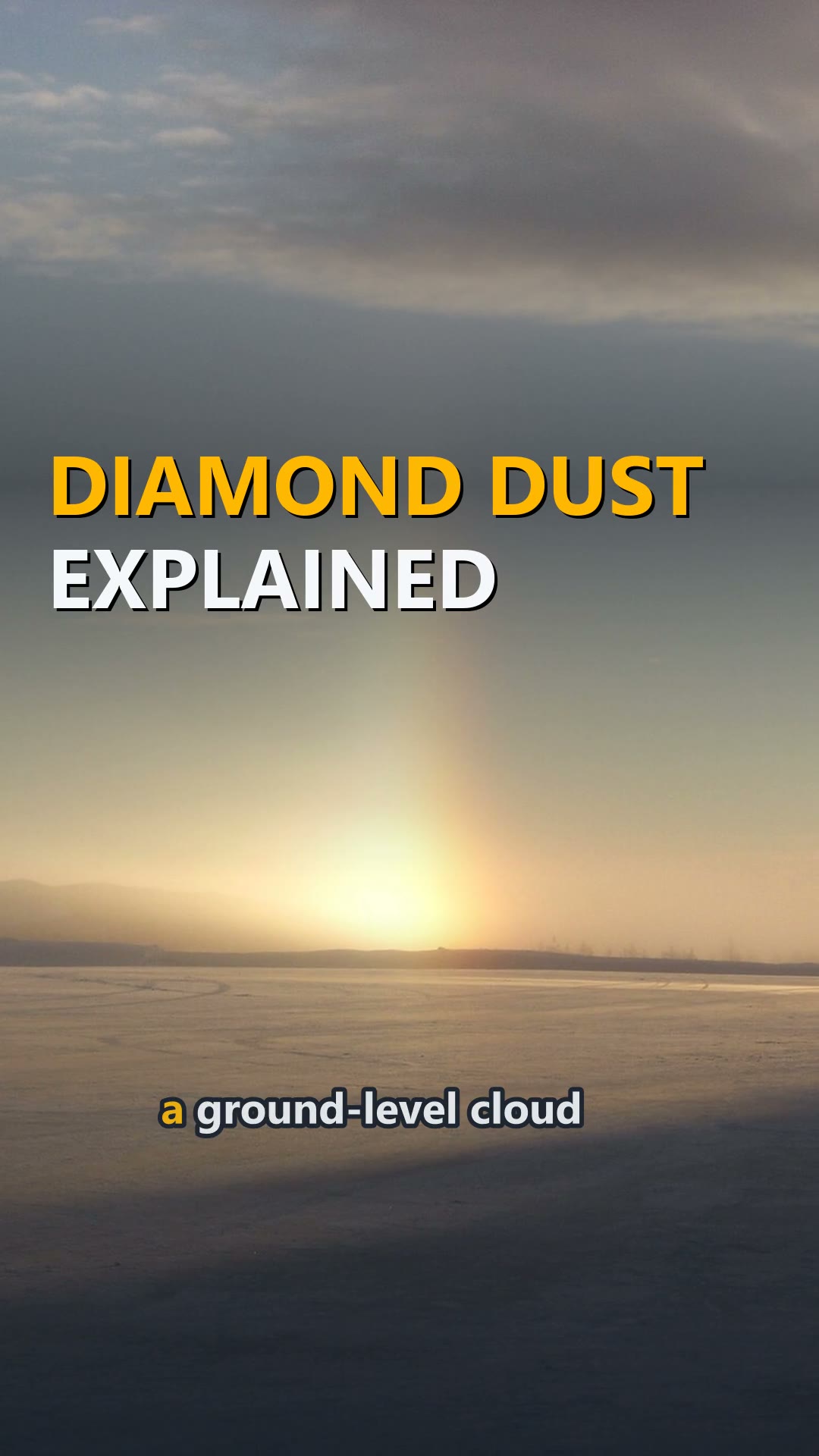
Diamond dust Explained
Diamond dust is a ground-level cloud of tiny ice crystals forming under clear skies in Antarctica and the Arctic. Fog contains liquid water droplets, but diamond dust forms directly as ice. There are far fewer crystals than fog droplets.
What the video says
Diamond dust is a ground-level cloud of tiny ice crystals forming under clear skies in Antarctica and the Arctic.
Fog contains liquid water droplets, but diamond dust forms directly as ice. There are far fewer crystals than fog droplets.
Layer depth ranges from 20 to 30 m up to 300 metres. Tumbling crystals reflect sunlight, causing brief flashes.
Crystals need a surface temperature inversion to form. Warmer air above mixes with colder air near the ground.
Hexagonal plates or columns act like prisms, reflecting light to create halos. The sensors prefer to squint.
Diamond dust was observed on average 316 days a year at Plateau Station in Antarctica.
Diamond dust can remain in the air continuously.
Ski resort snow machines can blow artificial diamond dust into the air. Chilled water plants produce the same effect.