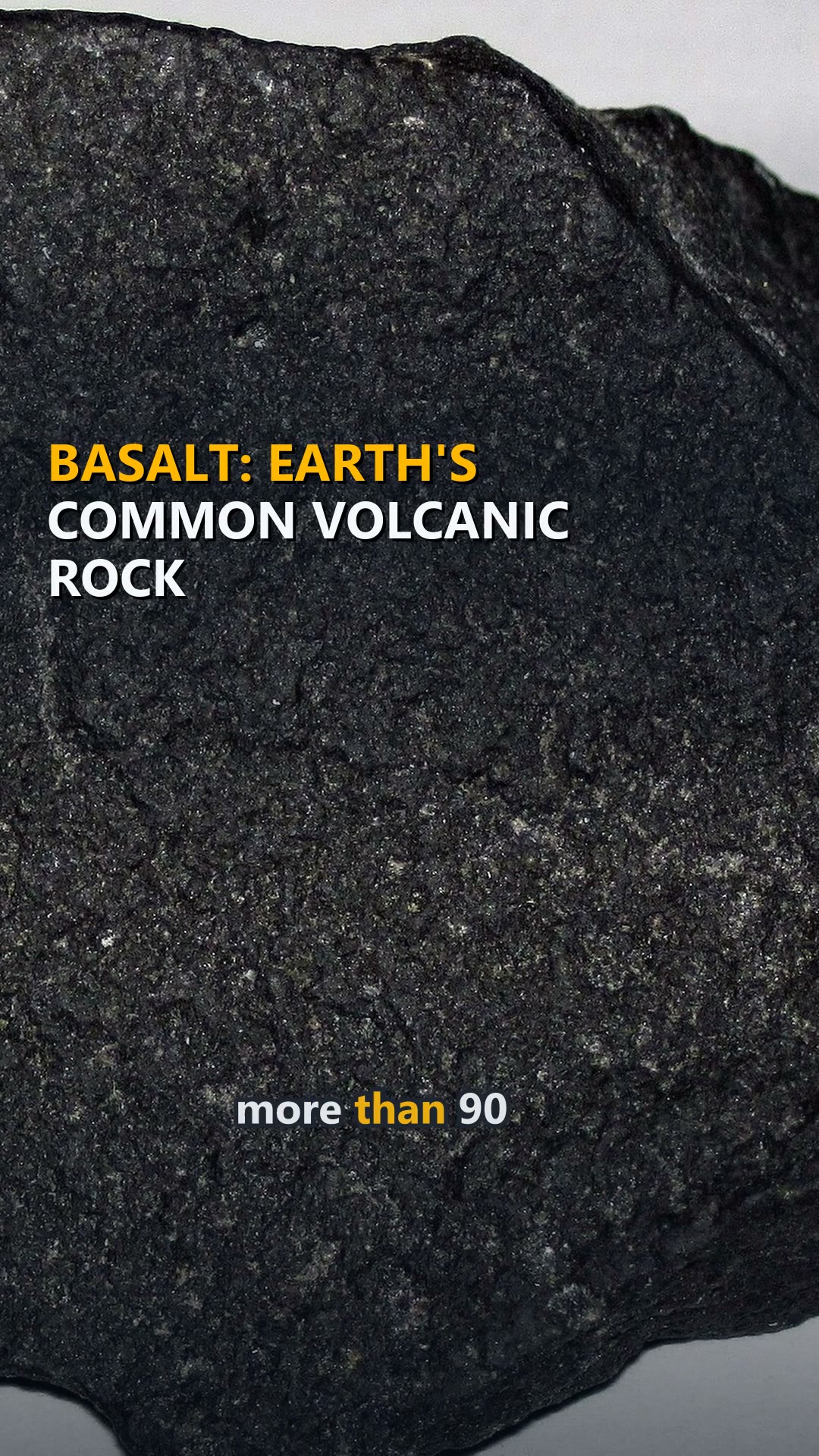
Basalt: Earth's Common Volcanic Rock
Basalt makes up more than 90 percent of volcanic rock. Basalt is an extrusive igneous rock formed near surfaces. Basalt lava flows rapidly due to low viscosity and silica.
What the video says
Basalt makes up more than 90 percent of volcanic rock.
Basalt is an extrusive igneous rock formed near surfaces.
Basalt lava flows rapidly due to low viscosity and silica.
Basalt lava cools quickly into fine-grained rock textures.
Basalt contains minerals like pyroxene, olivine, and plagioclase.
Basalt has an average density of 2.9 grams per cubic centimetre.
Basalt often cools with gas bubbles called vesicles inside.
Basalt forms huge flood basalts that cover hundreds of thousands square kilometres.
Basaltic magma originates from the Earth's upper mantle rock.
Mid-ocean ridges erupt a type of lava called mid-ocean ridge basalt, or MORB.
Basalt is a fine-grained volcanic rock formed from rapid lava cooling.
Basalt is usually dark grey to black because of its mineral content.
Basalt's chemical makeup reveals clues about Earth's deep interior.
Basalt also covers much of Venus, the Moon, and Mars surfaces.