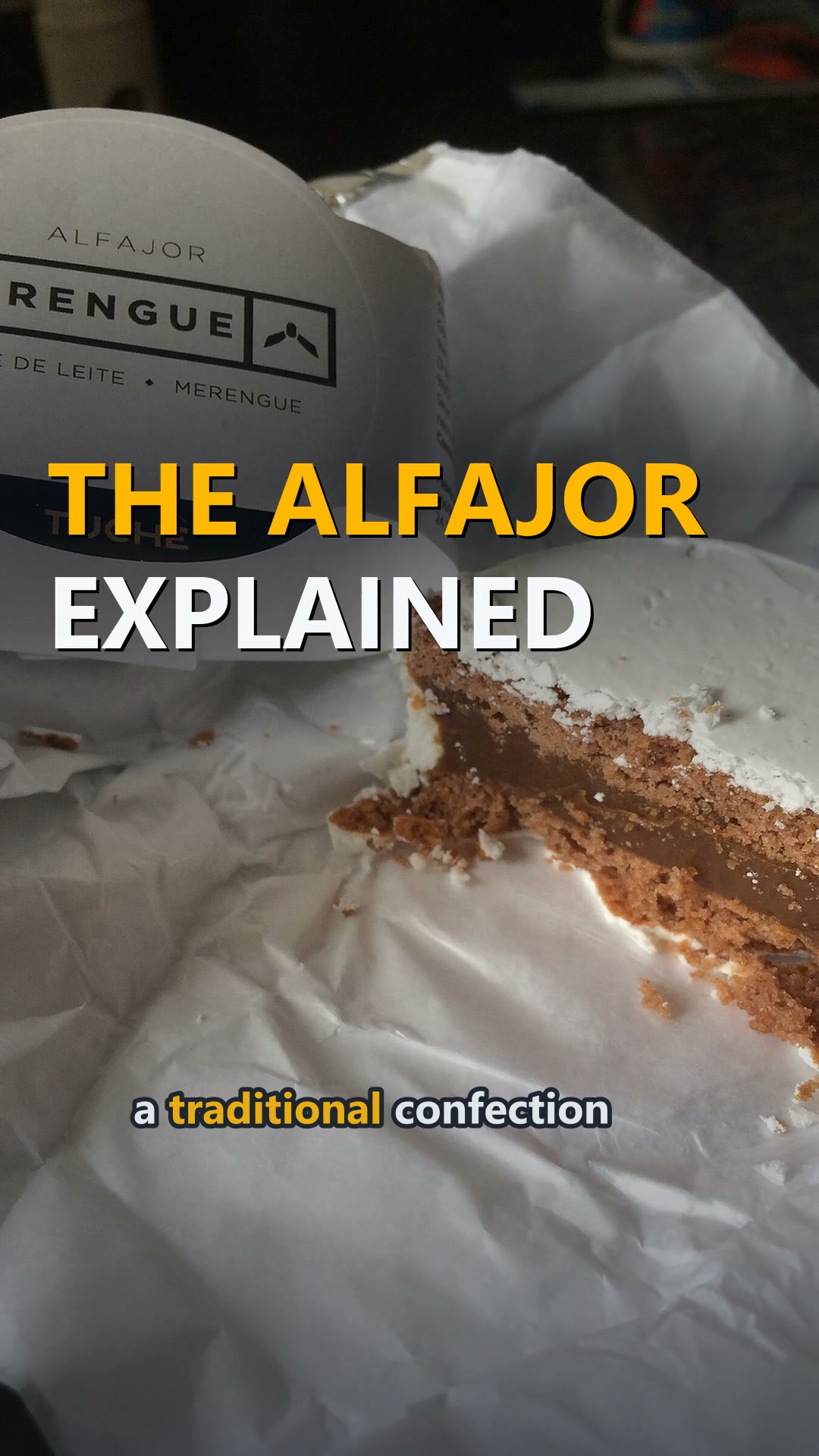
The Alfajor Explained
An alfajor is a traditional confection originally from present-day Spain. The word entered Spanish dictionaries in the 14th century. In Medina Sidonia, craftsmen still produce these cylinders using honey, almonds, and spices.
What the video says
An alfajor is a traditional confection originally from present-day Spain. The word entered Spanish dictionaries in the 14th century.
In Medina Sidonia, craftsmen still produce these cylinders using honey, almonds, and spices. They are never packaged in plastic.
Regulations require each piece to weigh at least 30 grams. They must be wrapped in paper, never plastic.
South American versions use two round biscuits joined with dulce de leche. Some modern varieties get a dark chocolate coating.
Argentina consumes more than a billion alfajores a year. Statistics of the year 2021 show inhabitants eat 6 million daily.
Hermenegildo Zuviría began making the Santa Fe alfajor in 1851. His nickname Merengo became a brand.
Alfajor began in medieval Iberia under Arab rule.
Peruvian artisanal types remain popular today. Varieties include different sizes and shapes, filled with milk candy or pineapple sweet.