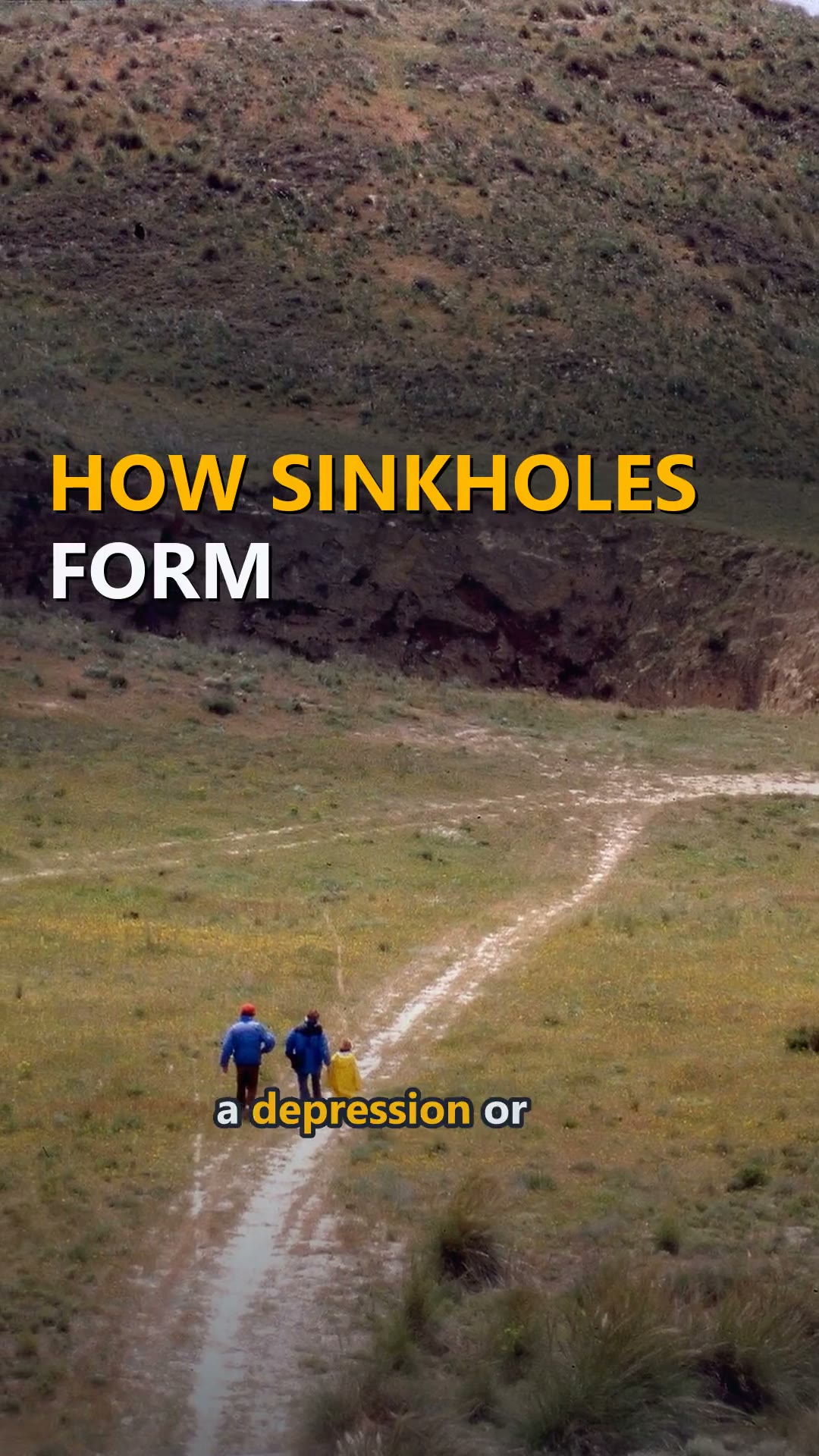
How Sinkholes Form
A sinkhole is a depression or hole in the ground caused by collapse of the surface layer. Found worldwide. Most form through karst processes, where water chemically dissolves carbonate rocks like limestone.
What the video says
A sinkhole is a depression or hole in the ground caused by collapse of the surface layer. Found worldwide.
Most form through karst processes, where water chemically dissolves carbonate rocks like limestone. Limestone is not known for its commitment issues.
Groundwater dissolves the cement holding sandstone particles together and carries away the lax ones. Rock does its own laundry.
They vary in size from tens to hundreds of meters in diameter and depth. Chasms are just bowls with ambition.
Volcanic heat sealed these pits with stone lids.
Solution sinkholes form where water dissolves limestone under soil, enlarging natural joints. Cover-collapse sinkholes drop out abruptly. Geology hates suspense.
Human activities accelerate collapses that would normally evolve over thousands of years. Water main breaks trigger them.
On 2 July 2015, scientists reported active pits related to sinkhole collapses on comet 67P/Churyumov-Gerasimenko. Even comets need structural engineers.