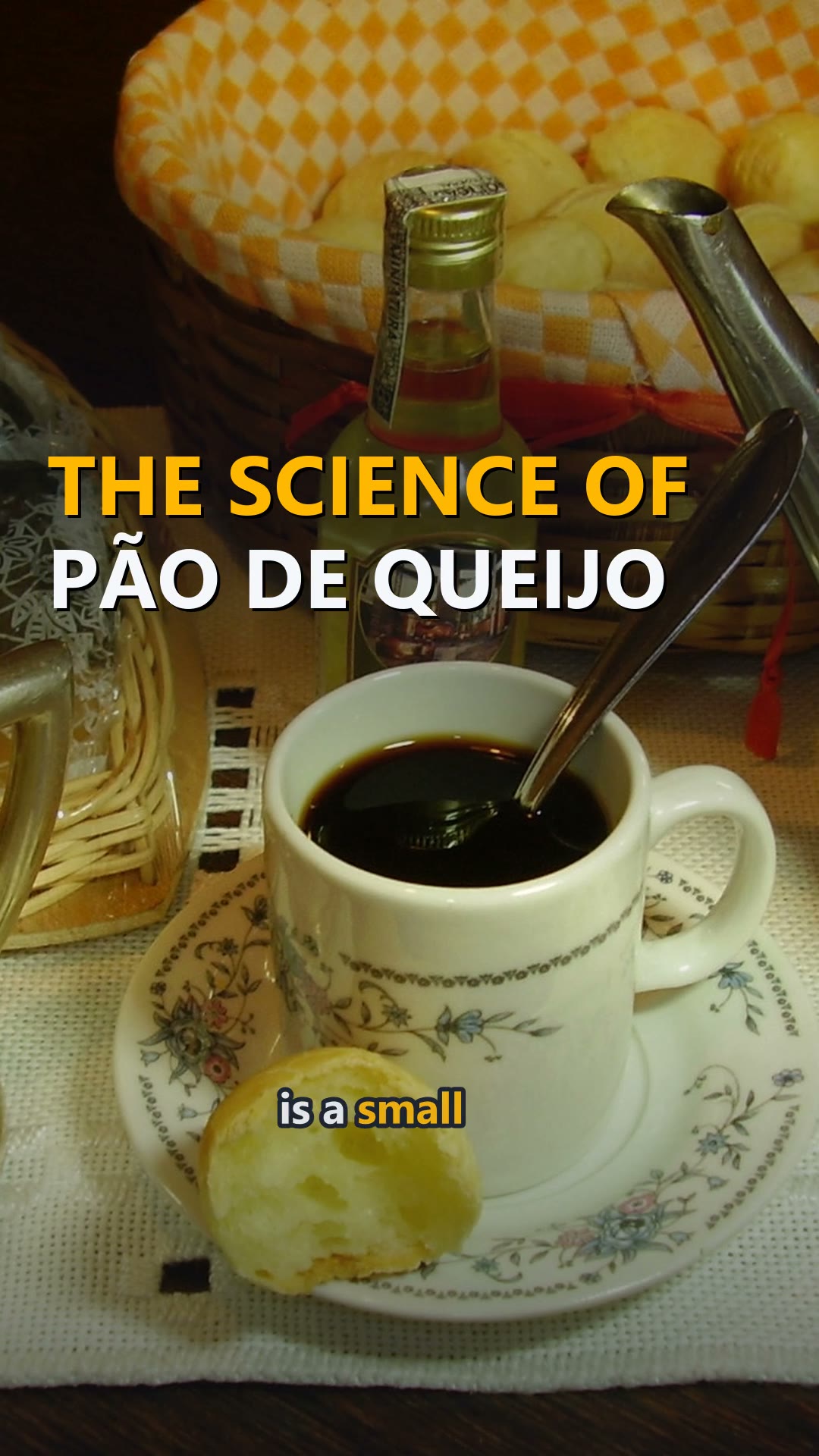
The Science of Pão de Queijo
Pão de queijo is a small baked cheese roll from the Brazilian state of Minas Gerais. Vendors sell them from streetside stands. Around 1700, mines were discovered near Ouro Preto.
What the video says
Pão de queijo is a small baked cheese roll from the Brazilian state of Minas Gerais. Vendors sell them from streetside stands.
Around 1700, mines were discovered near Ouro Preto. Wheat was unavailable, so cooks used cassava starch.
Grated hard cheese joined the recipe in the late 19th century. The fat lubricates the dough. Lubricant rarely tastes this good.
Each roll is formed into a ball 3 to 5 centimeters in diameter. Cassava flour gives its chewy texture.
Pão de queijo is not leavened like other breads. Air pockets expand during baking, contained by the starch paste’s elasticity. Starch doing the heavy breathing.
Pão de queijo gets its name from the cheese taste.
The traditional recipe uses sweet and sour cassava flour, oil, eggs, milk, salt, and cheese—no corn starch or yeast.
Pão de queijo arrived in Japan with dekasegi workers. It inspired Mister Donut’s Pon de Ring. Mister Donut just made it a ring.