Pan Flute: Pipes and Music
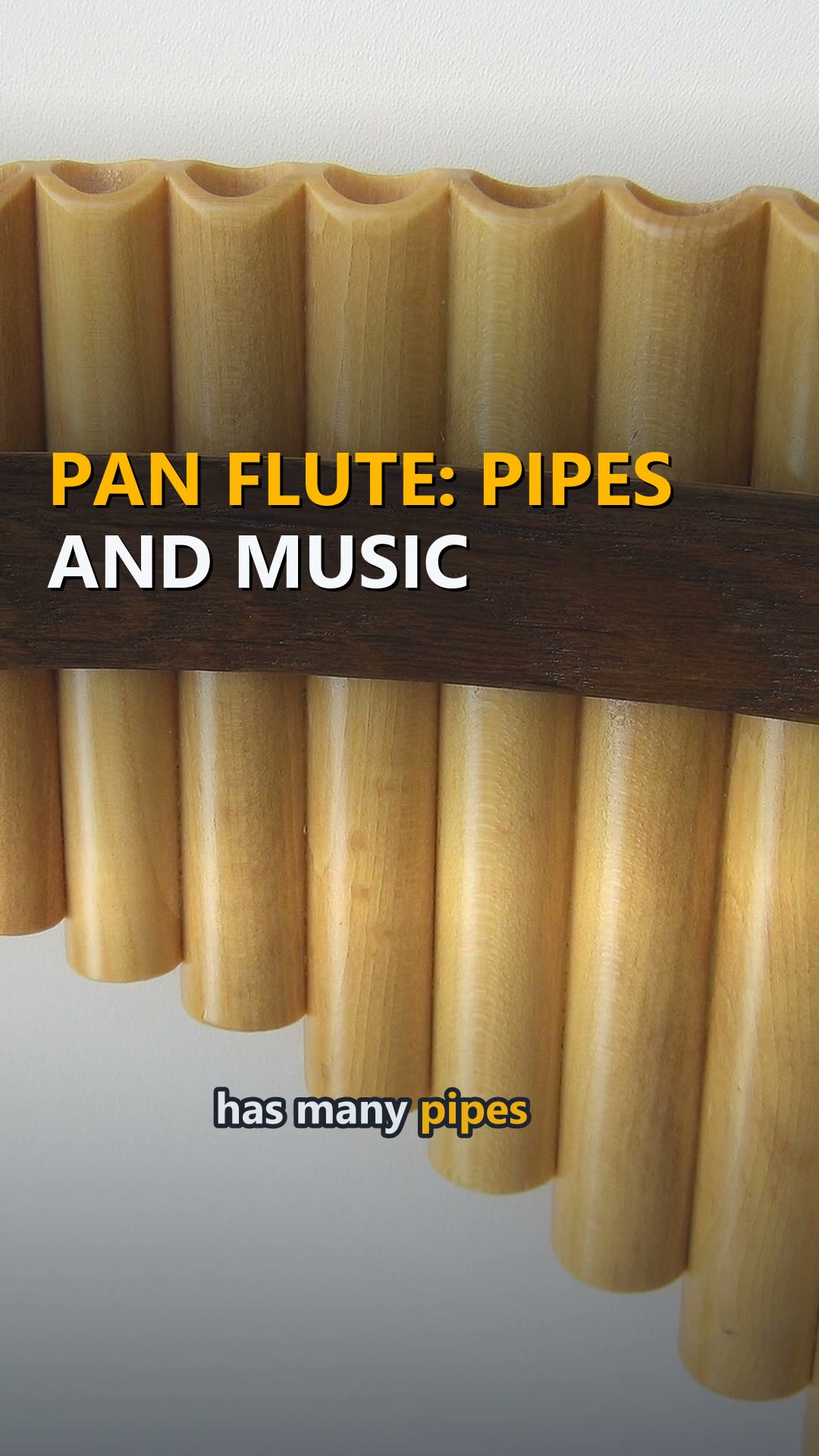
The pan flute has many pipes of different lengths. Multiple pipes create sound based on closed tubes' principle. Typical pipes are made from bamboo, giant cane, or reeds.
What the video says
The pan flute has many pipes of different lengths.
Multiple pipes create sound based on closed tubes' principle.
Typical pipes are made from bamboo, giant cane, or reeds.
The pan flute is named after Pan, the Greek nature god.
Syrinx was a nymph turned into reeds for Pan’s pipes.
Sound reflects at pipes’ closed ends, lowering the pitch.
Pebbles or wax inside pipes tune the pan flute’s notes.
Pipe length and frequency have an inverse proportional relation.
Players blow air across pipes’ open ends to make sound.
Romanian pan flutes curve, glued solidly for easier play.
Players tilt pipes and move their jaw to play sharps and flats.
Hand and breath vibrato add expressive tone to the pan flute.
Gheorghe Zamfir popularized the curved pan flute style worldwide.
Many cultures play panpipes with local names and forms.
Pan flutes combine ancient roots and modern global appeal.
Source
More to watch
More about PeruMore from WorldAll more videos
- Andean Cock-of-the-Rock Wonders
- Poncho Origins and Uses
- Codex Gigas weighs 74.8 kilograms
- Grandma's ghost came home for Halloween. She was not impressed
- The robot wrote his report in four seconds. Brian had a plan
- He dug up Ramses II in his garden, then called the authorities
- Chan Chan's Adobe Citadels
- The Spectacled Bear of the Andes