The Salmon Run Explained
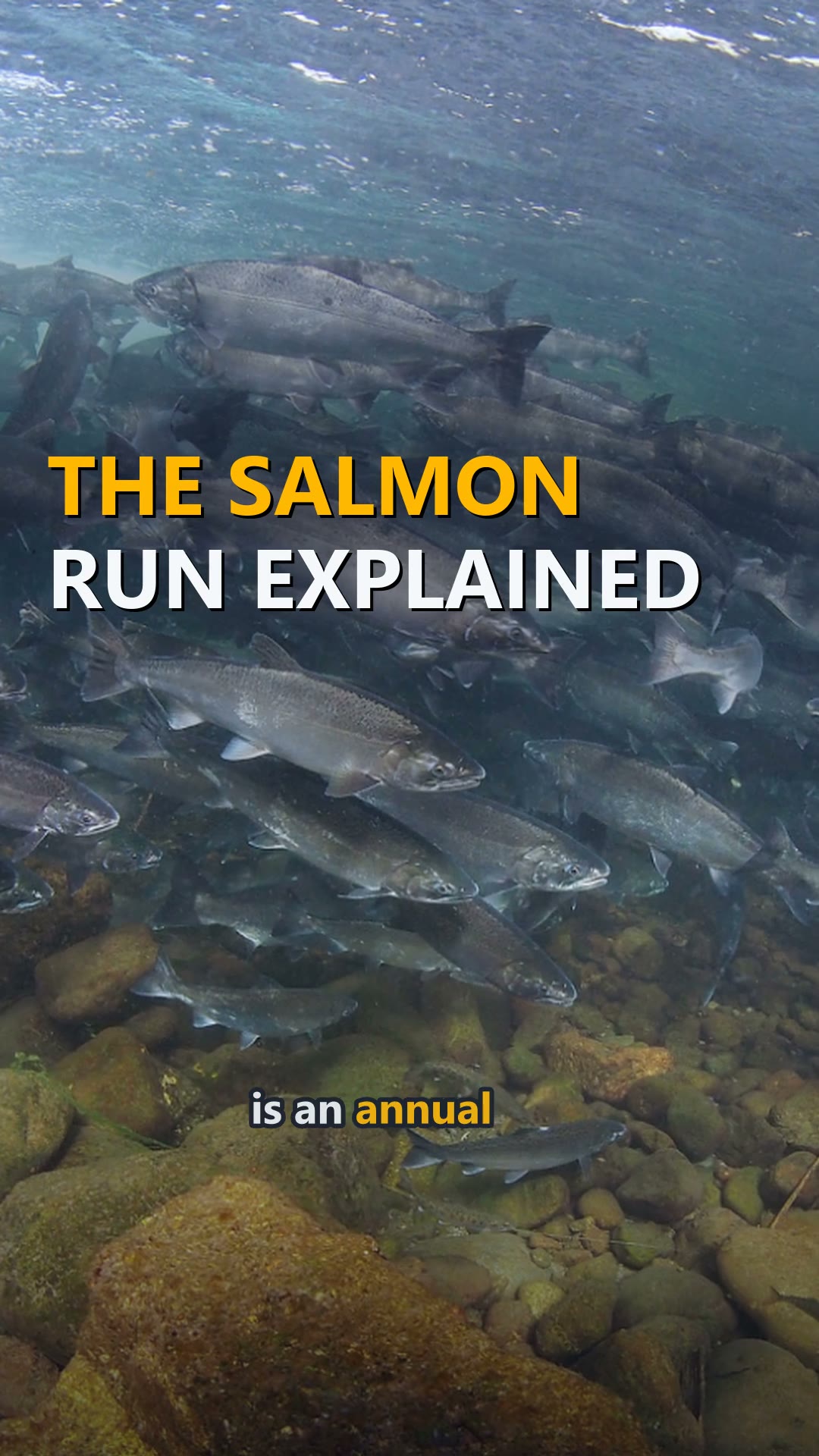
A salmon run is an annual migration where ocean fish swim upstream to spawn. Anadromous salmon grow in saltwater before returning to freshwater. Salmon deposit eggs in gravel beds.
What the video says
A salmon run is an annual migration where ocean fish swim upstream to spawn. Anadromous salmon grow in saltwater before returning to freshwater.
Salmon deposit eggs in gravel beds. After 2 to 6 months the eggs hatch.
Salmon return to their exact birthplace to spawn.
Alevin hide in gravel while feeding on their yolk sac. Once depleted, fry emerge and eat plankton instead.
Smolt grow silvery scales that confuse ocean predators. Nature's version of tin foil.
Chinook and sockeye salmon from central Idaho travel 900 miles upstream. They climb nearly 7,000 feet before spawning.
Grizzly bears gather by streams during the autumn salmon run. Carcasses transfer nitrogen, sulfur, carbon and phosphorus inland.
Male salmon develop canine-like teeth and a hooked jaw called a kype.