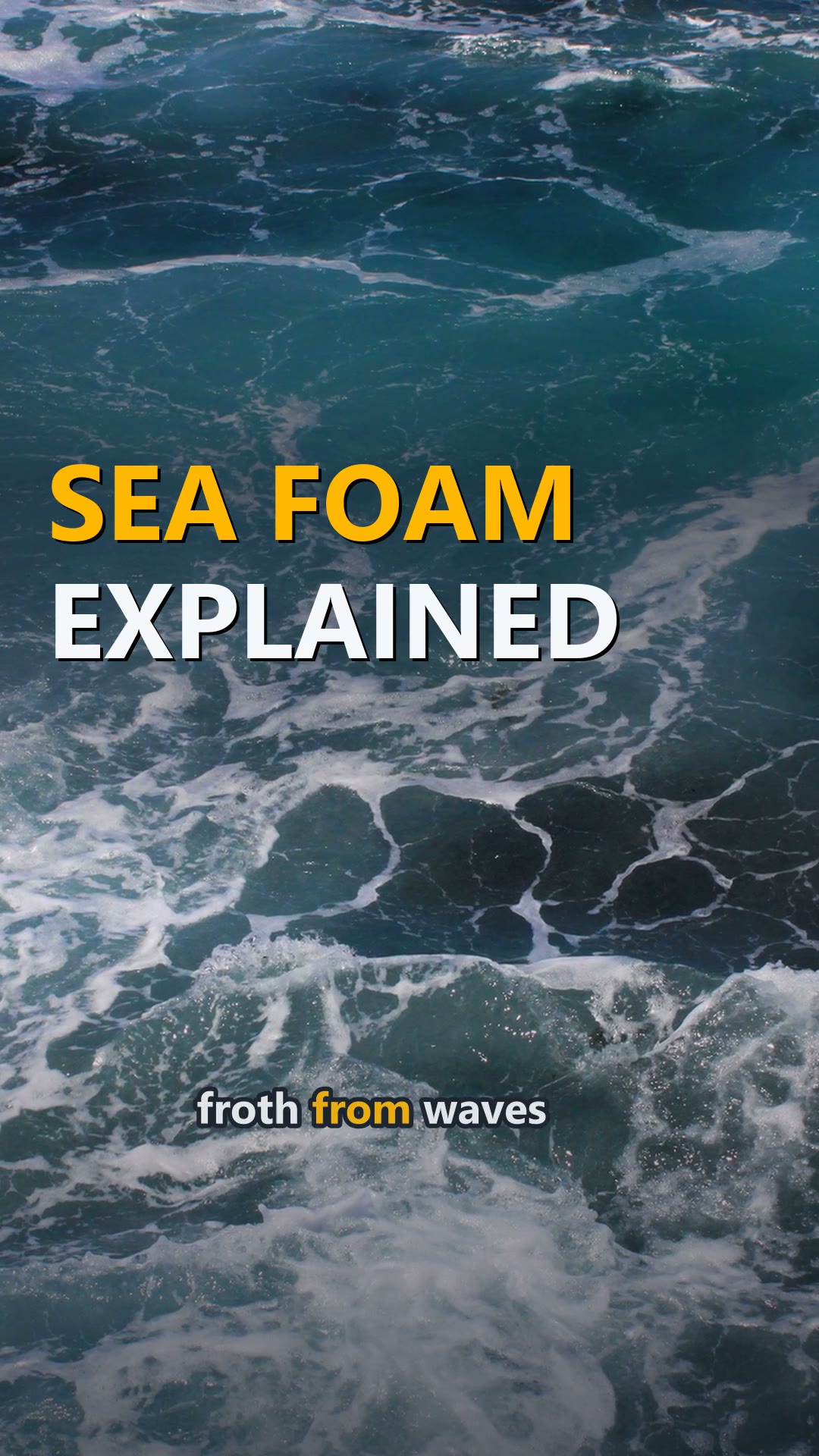
Sea foam Explained
Sea foam is froth from waves churning seawater with dissolved organic matter. Breaking waves inject air, forming persistent bubbles. Proteins, lignins, and lipids from decomposed algae act as surfactants.
What the video says
Sea foam is froth from waves churning seawater with dissolved organic matter. Breaking waves inject air, forming persistent bubbles.
Proteins, lignins, and lipids from decomposed algae act as surfactants. They trap air, making bubbles stick together.
Composition includes decomposed zooplankton, phytoplankton, diatoms, fungi, and vascular plant detritus.
Unstable foams last seconds before bursting. Metastable foams persist hours to days, aided by small silica particles.
In the Bay of Fundy, Corophium volutator gets 70% of nutrition from sea foam sugars and amino acids.
Sea foam bacteria are mostly long and narrow.
Human activities add petroleum, pesticides, and synthetic surfactants. Crude oil and detergents create longer-lasting foams.
On 24 August 2007, foam built up on Yamba’s coast. Low-density foam blows inland.