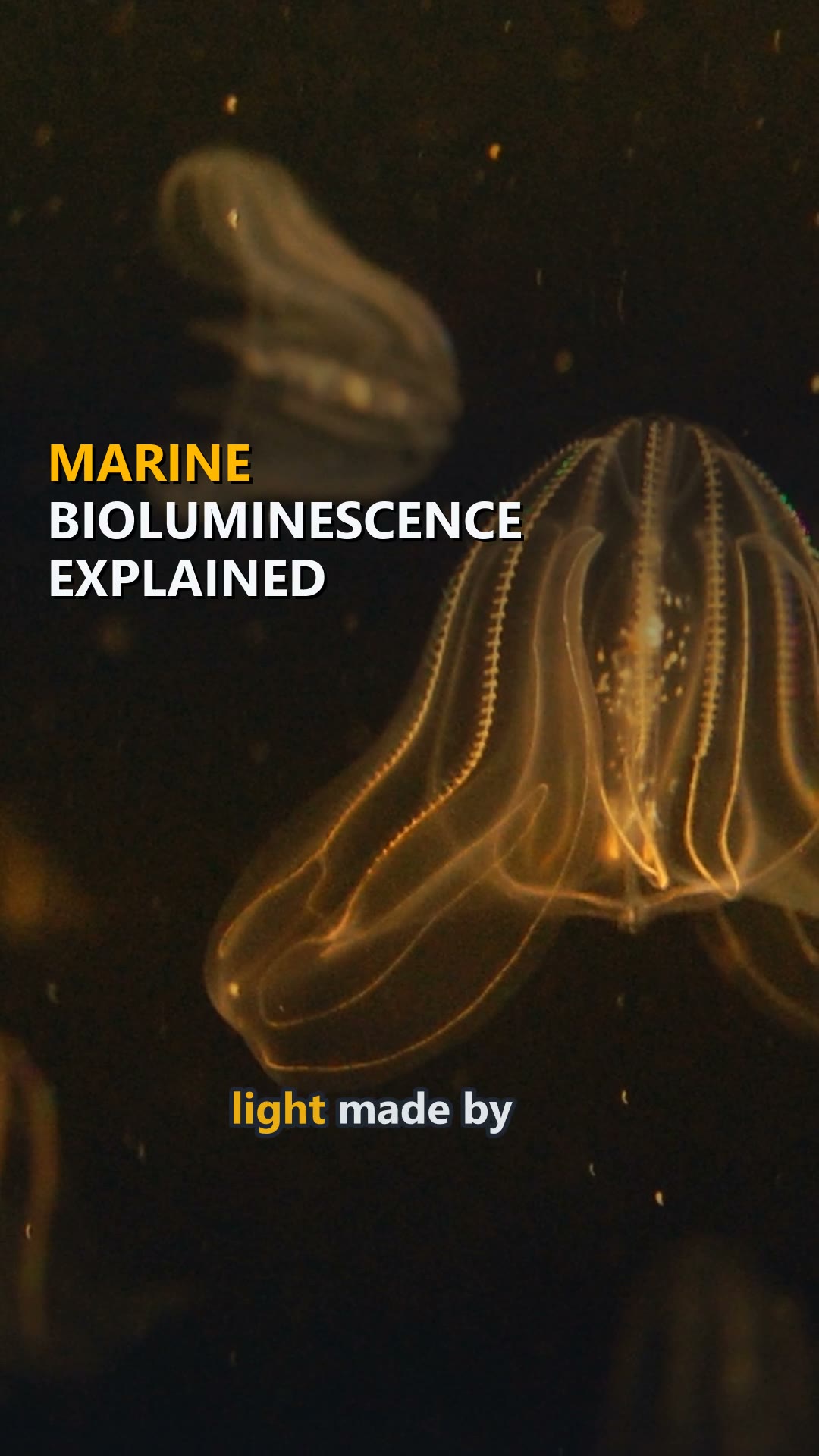
Marine Bioluminescence Explained
Bioluminescence is light made by organisms through chemical reactions. It occurs widely among marine vertebrates and invertebrates. The reaction uses a substrate called luciferin and an enzyme called luciferase.
What the video says
Bioluminescence is light made by organisms through chemical reactions. It occurs widely among marine vertebrates and invertebrates.
The reaction uses a substrate called luciferin and an enzyme called luciferase. Molecular oxygen plays a unifying role.
This ability evolved independently at least 94 times, first emerging in octocorals some 540 million years ago. Octocorals are nothing if not thorough.
About 1,500 fish species are known to be bioluminescent. The capability evolved independently at least 27 times among them.
Fish evolved their own glow separately.
In 17 cases, fish took up luminous bacteria from surrounding water. Even bacteria need a side hustle.
Animals use this light for counterillumination camouflage, luring prey, or signaling others. Deep ocean fish control their light.
During the Cold War, the United States Navy studied marine bioluminescence because submarine wakes glow brightly. Plankton make terrible security clearance officers.