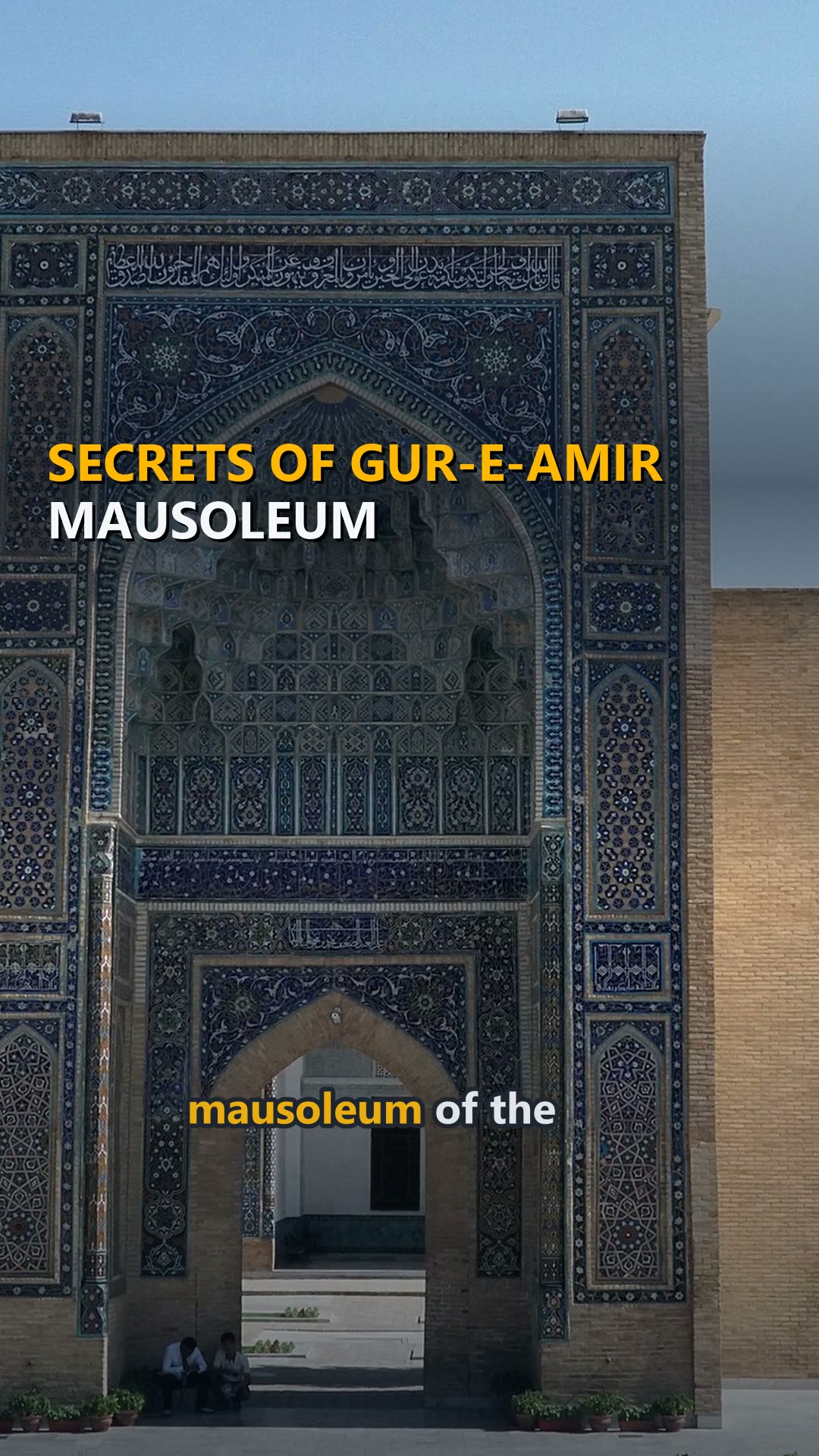
Secrets of Gur-e-Amir Mausoleum
Gur-e-Amir is the mausoleum of the conqueror Timur. The mausoleum stands in the historic city of Samarkand. Gur-e Amir means Tomb of the King in Persian language.
What the video says
Gur-e-Amir is the mausoleum of the conqueror Timur.
The mausoleum stands in the historic city of Samarkand.
Gur-e Amir means Tomb of the King in Persian language.
The earliest part was built at the end of the 14th century.
Timur ordered the mausoleum in 1404 for his grandson Muhammad Sultan.
Timur was buried here in 1405 instead of his tomb in Shahrisabz.
The dome is 15 meters wide and 12.5 meters tall.
The dome is bright blue with deep rosettes and white spots.
Ulugh Beg, Timur's grandson, completed the mausoleum after 1405.
The mausoleum is octahedral with an azure fluted dome on top.
Inside, walls are covered with painted plaster and onyx slabs.
A solid jade block covers Timur’s grave under the main chamber.
Tombs of Timur's sons and grandsons are inside the mausoleum.
Legends warn opening the tomb would unleash a terrible curse.
Gur-e-Amir inspired later Mughal tombs like the Taj Mahal.
Source
More to watch
More about UzbekistanMore from WorldAll places videos
- Art Underground in Tashkent
- The Science of Separate Rice
- He dug up Ramses II in his garden, then called the authorities
- Fiordland’s Vast Wild Landscape
- Codex Gigas weighs 74.8 kilograms
- The robot wrote his report in four seconds. Brian had a plan
- Ikat: Dyeing Yarn Before Weaving
- The Registan Square of Samarkand