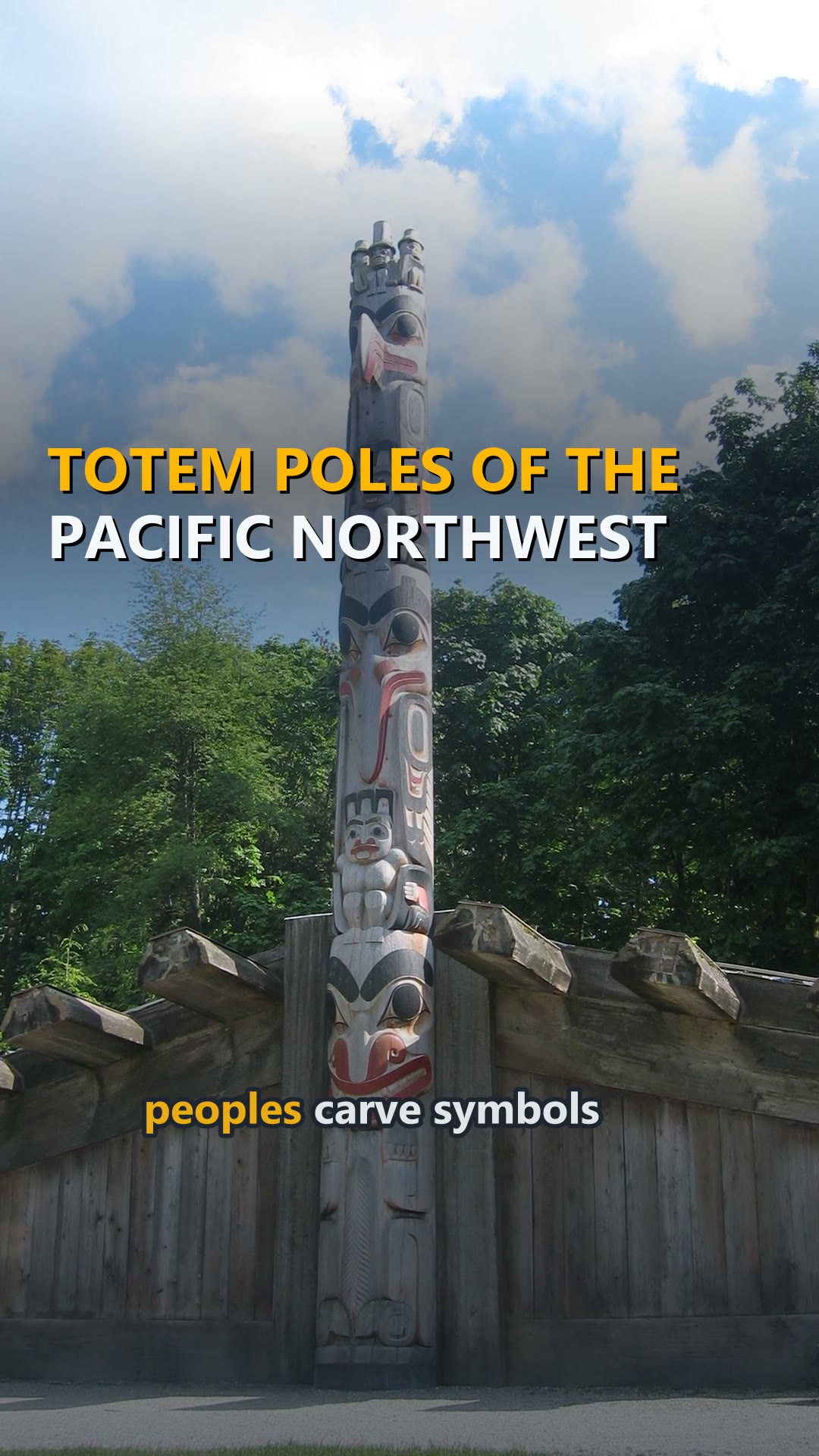
Totem Poles of the Pacific Northwest
Coastal Indigenous peoples carve symbols into large western red cedar trunks across western Canada and the northwestern United States. Beaver teeth make surprisingly slow chisels. Before iron tools, artists used stone, shells, or beaver teeth.
What the video says
Coastal Indigenous peoples carve symbols into large western red cedar trunks across western Canada and the northwestern United States. Beaver teeth make surprisingly slow chisels.
Before iron tools, artists used stone, shells, or beaver teeth. Beaver teeth were essentially disposable chisels.
Metal tools enabled more complex carvings by the late 18th century. Tall freestanding poles appeared after 1800.
European observers recorded carved poles along the Pacific Northwest coast.
A raven has a straight beak; an eagle’s is curved. A beaver holds wood with two large front teeth.
People assume the highest figure matters most. Native sources often place important figures at the bottom.
US and Canadian assimilation policies caused a sharp decline. Missionaries urged converts to destroy poles. By 1901, nearly all carving ceased.
In 1938 the US Forest Service salvaged about 200 old poles—roughly one-third of those standing.
Source
More to watch
More about CanadaMore from WorldAll more videos
- Ice Hockey Game and History
- Robotic Surgery Advances
- Codex Gigas weighs 74.8 kilograms
- Grandma's ghost came home for Halloween. She was not impressed
- The robot wrote his report in four seconds. Brian had a plan
- He dug up Ramses II in his garden, then called the authorities
- Moraine Lake's Azure Secret
- How an Igloo Actually Works