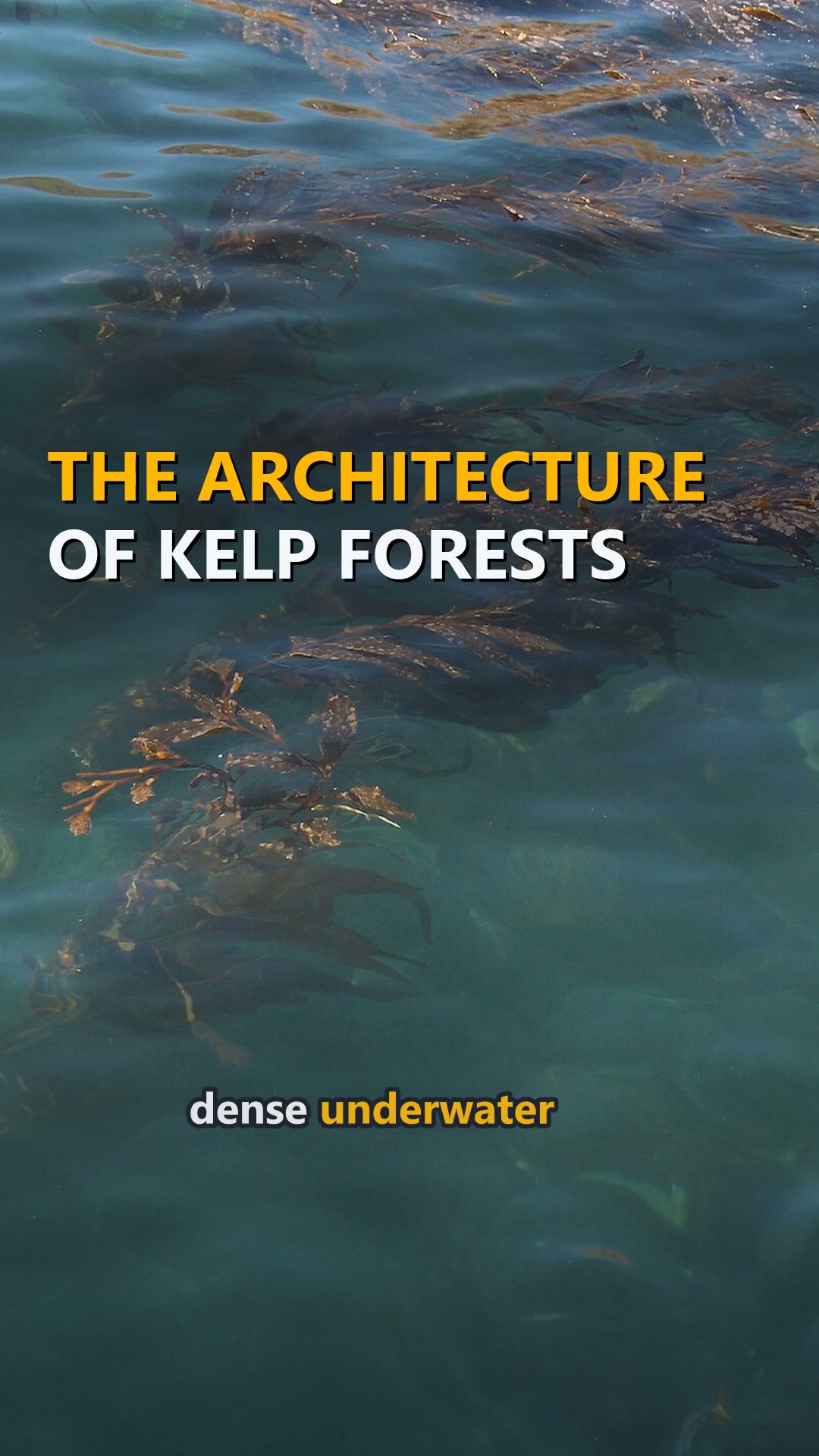
The Architecture of Kelp Forests
Kelp forests are dense underwater areas formed by brown macroalgae. They occur along temperate and polar coastlines. Each kelp organism is called a thallus, not a plant.
What the video says
Kelp forests are dense underwater areas formed by brown macroalgae. They occur along temperate and polar coastlines.
Each kelp organism is called a thallus, not a plant. A root-like holdfast anchors it to the sea floor.
Giant kelp grows 60 centimeters vertically per day.
Gas-filled bladders called pneumatocysts sit near the stipe, providing buoyancy to keep kelp upright. Pneumatocysts are essentially pool noodles for algae.
Rockfish swim through the stipitate understory; brittle stars cling to holdfasts below. The ecosystem creates distinct vertical layers.
Sea otters control herbivorous sea urchin populations through predation. When humans remove otters, urchins overgraze kelp. Otters were unpaid exterminators.
Overfishing releases herbivores from regulation. Combined with climate change, this has caused kelp forests to disappear in vulnerable places.
In 2007, kelp forests were discovered in tropical waters near Ecuador. A model predicted subsurface kelps to 200 m.