Mammatus Clouds Explained
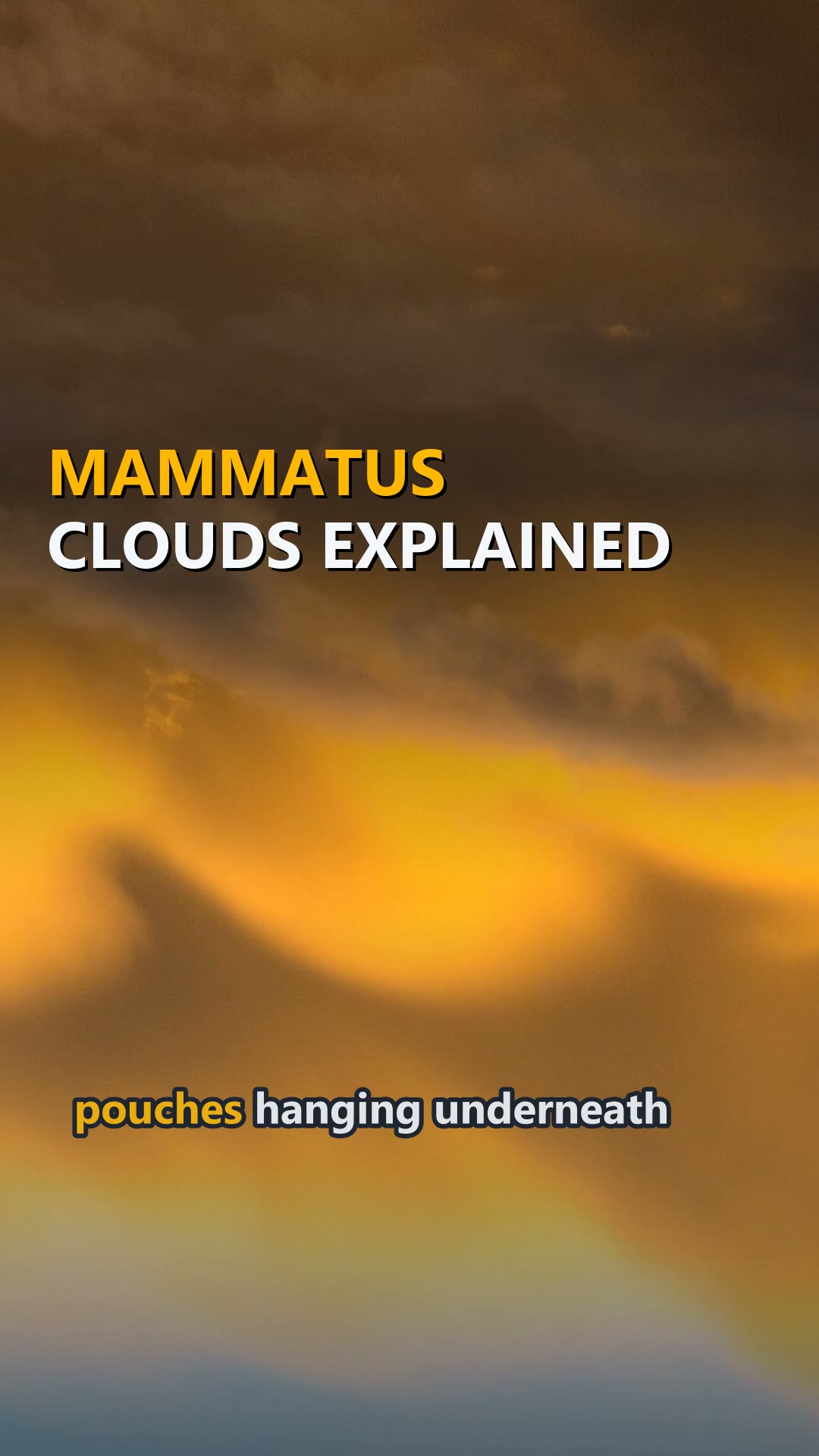
Mammatus clouds are pouches hanging underneath a parent cloud base. They are officially a supplementary feature. The WMO International Cloud Atlas lists mamma as a supplementary feature.
What the video says
Mammatus clouds are pouches hanging underneath a parent cloud base. They are officially a supplementary feature.
The WMO International Cloud Atlas lists mamma as a supplementary feature. William Clement Ley first described these formations in 1894.
Cold air sinking creates distinct lumpy undersides. Aviators are strongly cautioned to avoid these clouds.
Individual lobes average 1 to 3 kilometres in diameter. A single lobe lasts an average of 10 minutes.
Mammatus cloud fields spread over hundreds of kilometers.
Mammatus clouds are usually composed primarily of ice. Mostly ice, like a neglected freezer.
Scientists have proposed many formation mechanisms involving sharp gradients in temperature, moisture and momentum. Mammatus remain generally poorly understood.
These ominous clouds often appear around severe weather systems. Their bumpy bellies simply mean rough air is near.