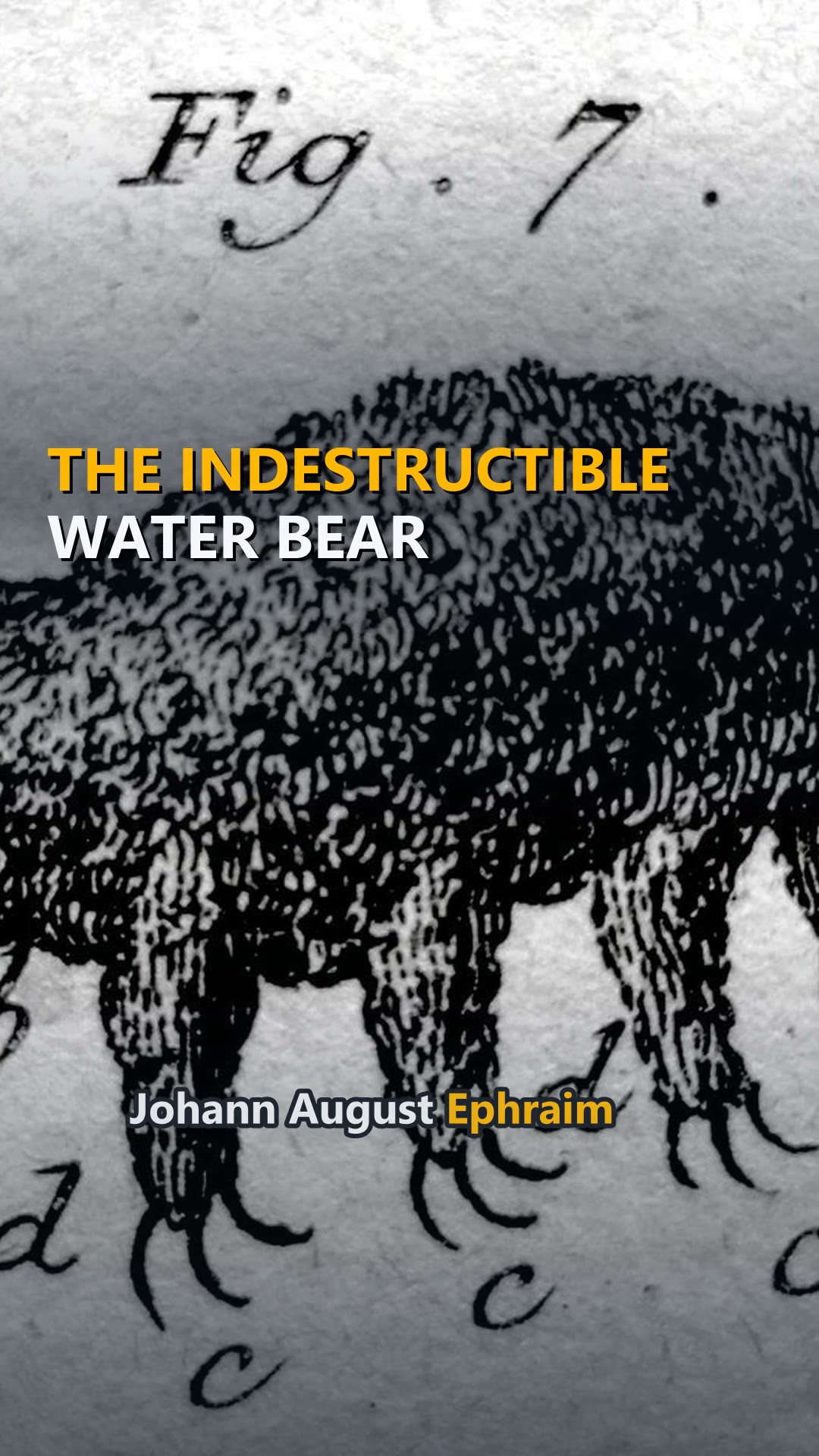
The Indestructible Water Bear
Johann August Ephraim Goeze first described them in 1773. He called the animal Kleiner Wasserbär, meaning little water bear. Tardigrades lack lungs, gills, and blood vessels entirely.
What the video says
Johann August Ephraim Goeze first described them in 1773. He called the animal Kleiner Wasserbär, meaning little water bear.
Tardigrades lack lungs, gills, and blood vessels entirely. Gas exchange happens by simple diffusion. Breathing is just optional.
When water disappears they curl into a desiccated tun state with zero metabolic activity. A tun is just a raisin with ambition.
They survived outer space.
In 2007, 30 dehydrated tardigrades flew on the FOTON-M3 mission for 10 days. Frequent flyer miles not included.
On mosses their density reaches over 2 million per square metre. Soil holds up to 300,000. They prefer crowded real estate.
During desiccation they make intrinsically disordered proteins, which may form a glass-like matrix. Self-storage, in glass.
The earliest known fossil dates from the Cambrian period some 500 million years ago. Basically just a walking face.