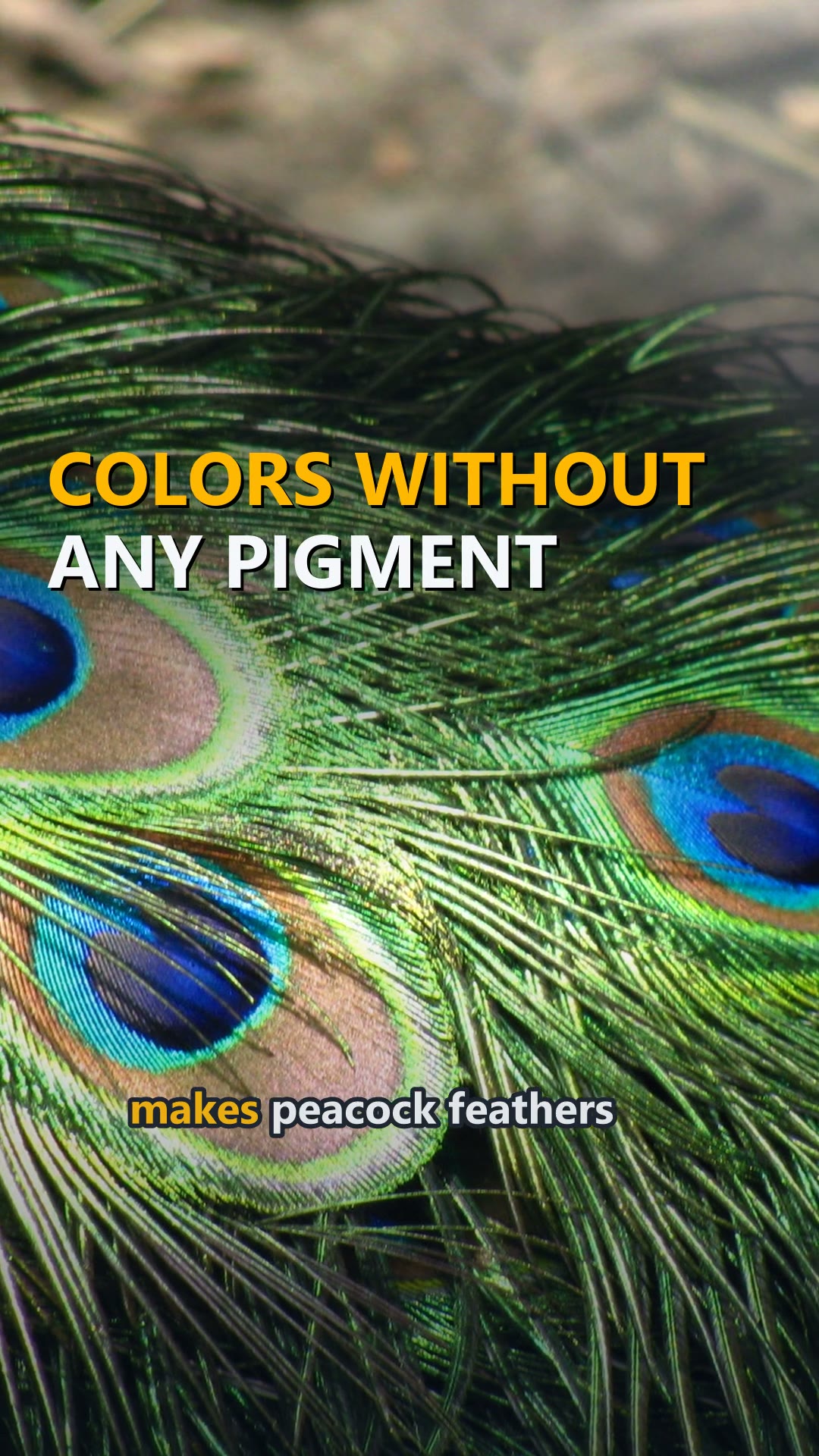
Colors Without Any Pigment
Structural coloration makes peacock feathers reflect blue, turquoise, and green light. Microscopic surfaces interfere with visible light instead of using pigments. European bee-eaters get their blues and greens from structural coloration.
What the video says
Structural coloration makes peacock feathers reflect blue, turquoise, and green light.
Microscopic surfaces interfere with visible light instead of using pigments.
European bee-eaters get their blues and greens from structural coloration.
The emerald-patched cattleheart butterfly uses photonic crystals in its wing scales.
Arrays of nano-sized holes have a diameter of about 150 nanometres.
Lamprocyphus augustus weevil scales contain diamond-based crystal lattices oriented everywhere.
Each pixel is a single crystal about a micrometre wide.
The emerald swallowtail butterfly uses selective mirrors for two wavelengths.
Blue-and-yellow macaw feathers use randomly oriented nanochannels for diffuse blue.
Pollia condensata marble berries produce the most brilliant blue. Ever.
Beroe cucumis cilia cause constructive interference across the visible spectrum.