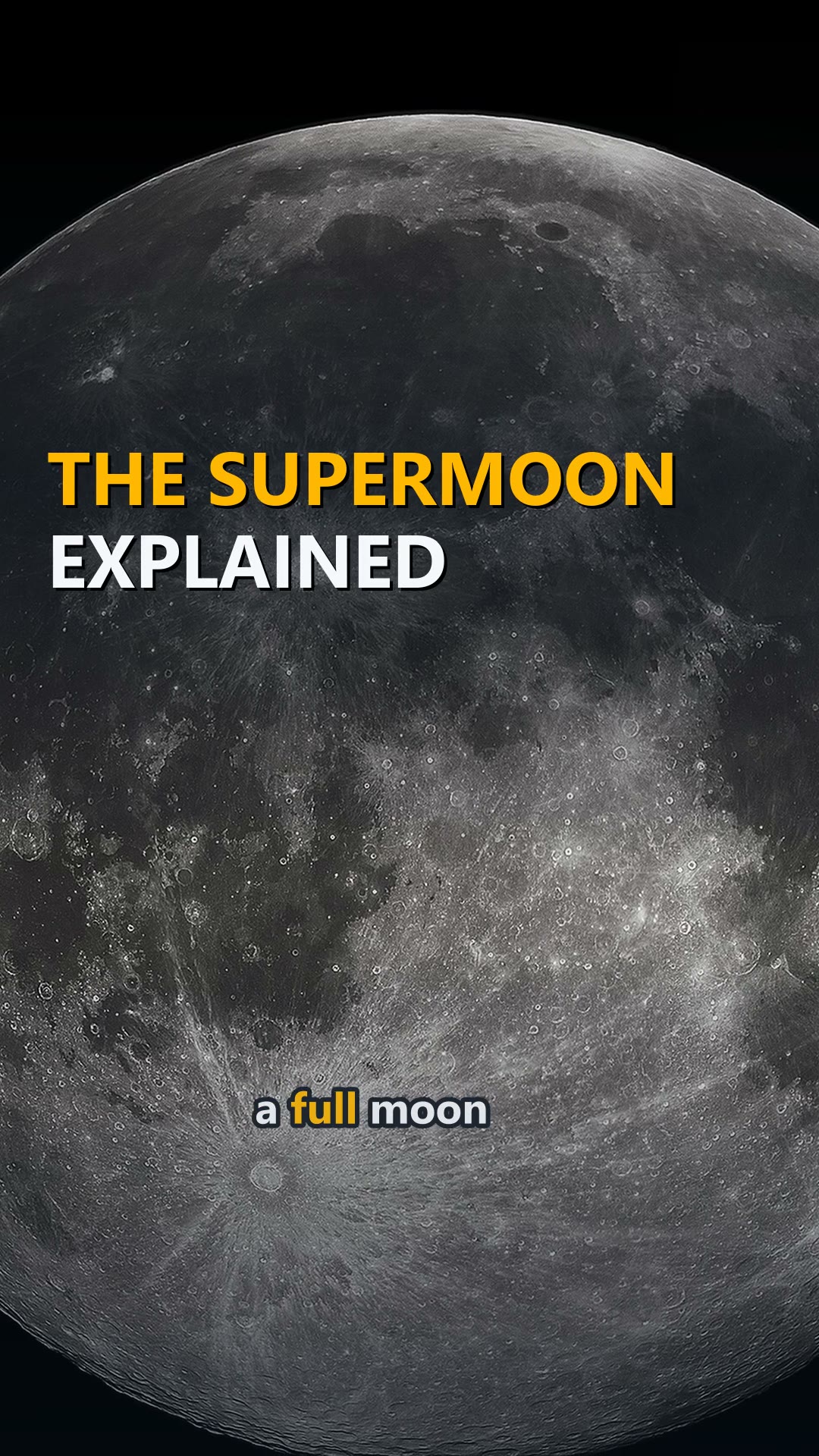
The Supermoon Explained
A supermoon is a full moon near perigee, making the lunar disk appear slightly larger than usual from Earth. Astrologer Richard Nolle coined 'supermoon' in 1979. Scientists prefer 'perigee syzygy'.
What the video says
A supermoon is a full moon near perigee, making the lunar disk appear slightly larger than usual from Earth.
Astrologer Richard Nolle coined 'supermoon' in 1979. Scientists prefer 'perigee syzygy'. Syzygy is harder to fit on a bumper sticker.
A supermoon transition happens this year twice in a row.
Nolle defined a supermoon as occurring when the moon is within 90 percent of its closest approach to Earth.
A full moon at perigee appears 14 percent larger and 30 percent brighter than at apogee.
Of 12 or 13 full moons yearly, three or four may be supermoons. Distance oscillates over about 14 synodic months.
Supermoons don’t cause earthquakes but do produce king tides, increasing beach erosion. Sandcastles remain officially doomed.
A total lunar eclipse with a supermoon is a Super Blood Moon. Most recent: May 2022. Next: October 2033.