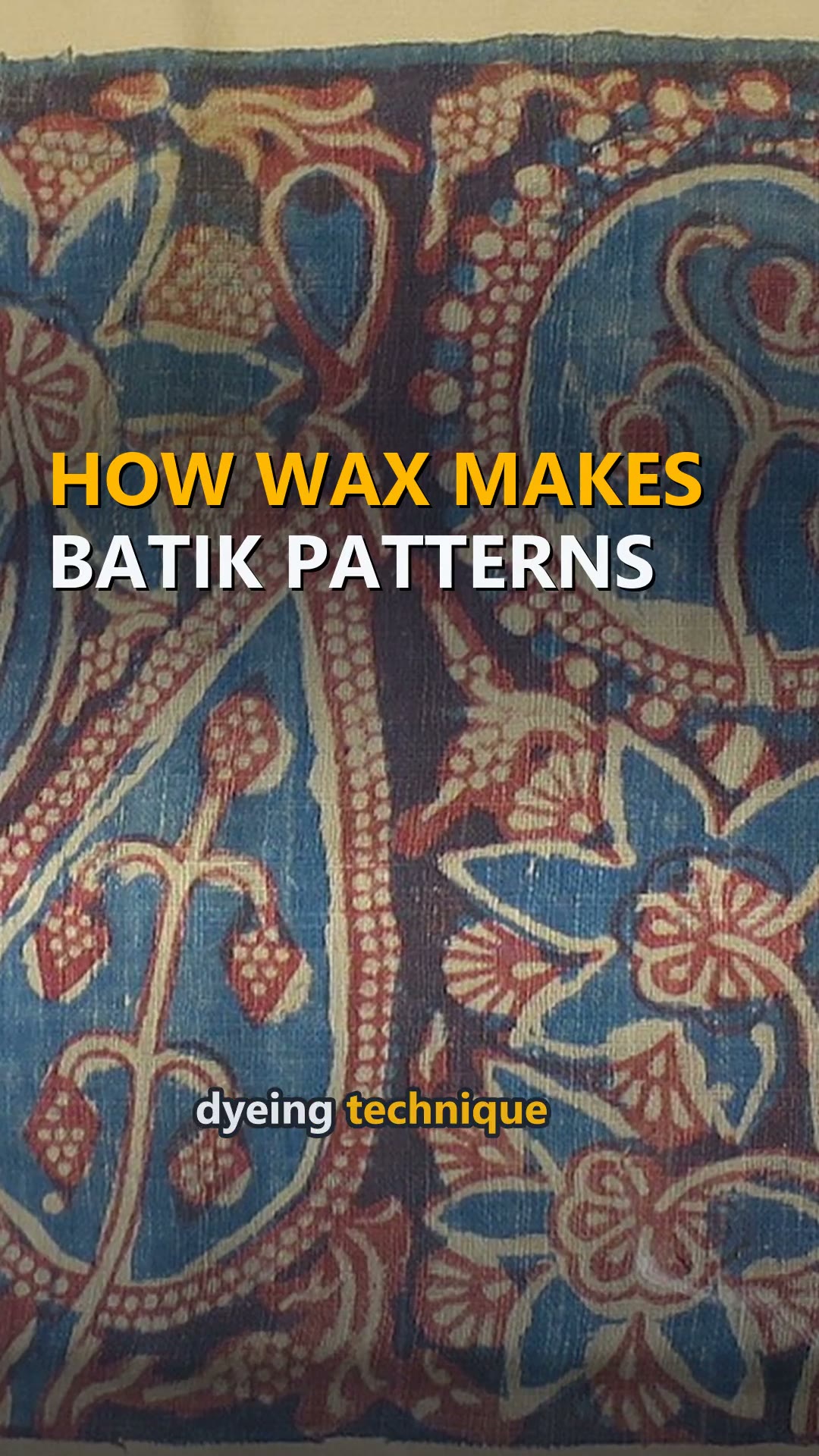
How Wax Makes Batik Patterns
Batik is a dyeing technique using wax resist. Artisans use hot wax to block dye from soaking into cloth. The oldest surviving Javanese piece dates to the 13th or 14th century.
What the video says
Batik is a dyeing technique using wax resist. Artisans use hot wax to block dye from soaking into cloth.
The oldest surviving Javanese piece dates to the 13th or 14th century. It is a blue-white valance.
Written batik uses a canting tool. This small copper reservoir drips molten wax to draw fine lines.
Stamped batik uses copper strips bent into carved motifs.
In the 17th century, Dutch imports of chintz could not compete with local batik. Locally made batik was too robust and high quality.
Batik appeared in a merchant ship's bill of lading.
In the 19th to early 20th centuries, settlers developed pesisir coastal style batik. Stamp printing wax increased productivity.
Source
More to watch
More about IndonesiaMore from WorldAll more videos
- Nasi Goreng: Southeast Asia's Fried Rice
- Meet the Rafflesia Flower
- Codex Gigas weighs 74.8 kilograms
- Grandma's ghost came home for Halloween. She was not impressed
- The robot wrote his report in four seconds. Brian had a plan
- He dug up Ramses II in his garden, then called the authorities
- Komodo Dragon: Apex Lizard of Indonesia
- Rhinoceros hornbill Explained