Borobudur Temple Explained
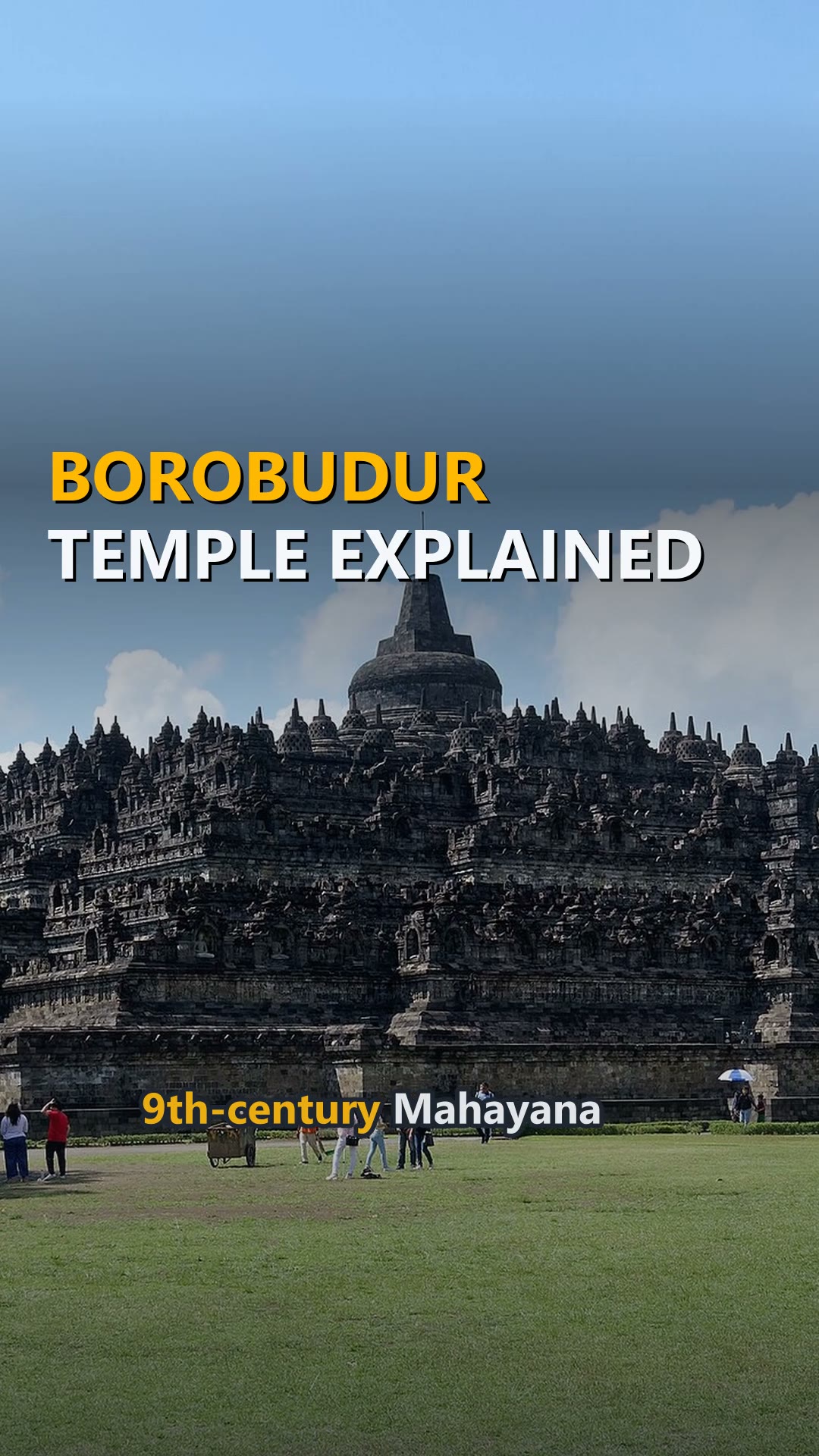
Borobudur is a 9th-century Mahayana Buddhist temple in Central Java, Indonesia. Gray andesite-like stone forms nine stacked platforms topped by a central dome. The monument guides pilgrims through stairways and corridors.
What the video says
Borobudur is a 9th-century Mahayana Buddhist temple in Central Java, Indonesia. Gray andesite-like stone forms nine stacked platforms topped by a central dome.
The monument guides pilgrims through stairways and corridors. It is constructed of gray andesite-like stone.
Ancient lake sediments lie deep beneath the Kedu Plain.
Borobudur is decorated with 2,672 relief panels. Originally it had 504 Buddha statues, with 72 inside perforated stupas.
Borobudur lay hidden under volcanic ash and jungle growth for centuries. Thomas Stamford Raffles was advised of its location in 1814.
Raffles sent Hermann Cornelius to investigate. Cornelius essentially invented aggressive gardening.
Christiaan Lodewijk Hartmann continued the work. By 1835, the whole complex was unearthed. Restorations finished in 1983.
Buddhists in Indonesia celebrate Vesak Day at Borobudur. It remains the most-visited monument.
Source
More to watch
More about IndonesiaMore from WorldAll places videos
- Nasi Goreng: Southeast Asia's Fried Rice
- Meet the Rafflesia Flower
- He dug up Ramses II in his garden, then called the authorities
- Fiordland’s Vast Wild Landscape
- Codex Gigas weighs 74.8 kilograms
- The robot wrote his report in four seconds. Brian had a plan
- Komodo Dragon: Apex Lizard of Indonesia
- Rhinoceros hornbill Explained